Last Updated on January 31, 2026 by Fly High Coaching
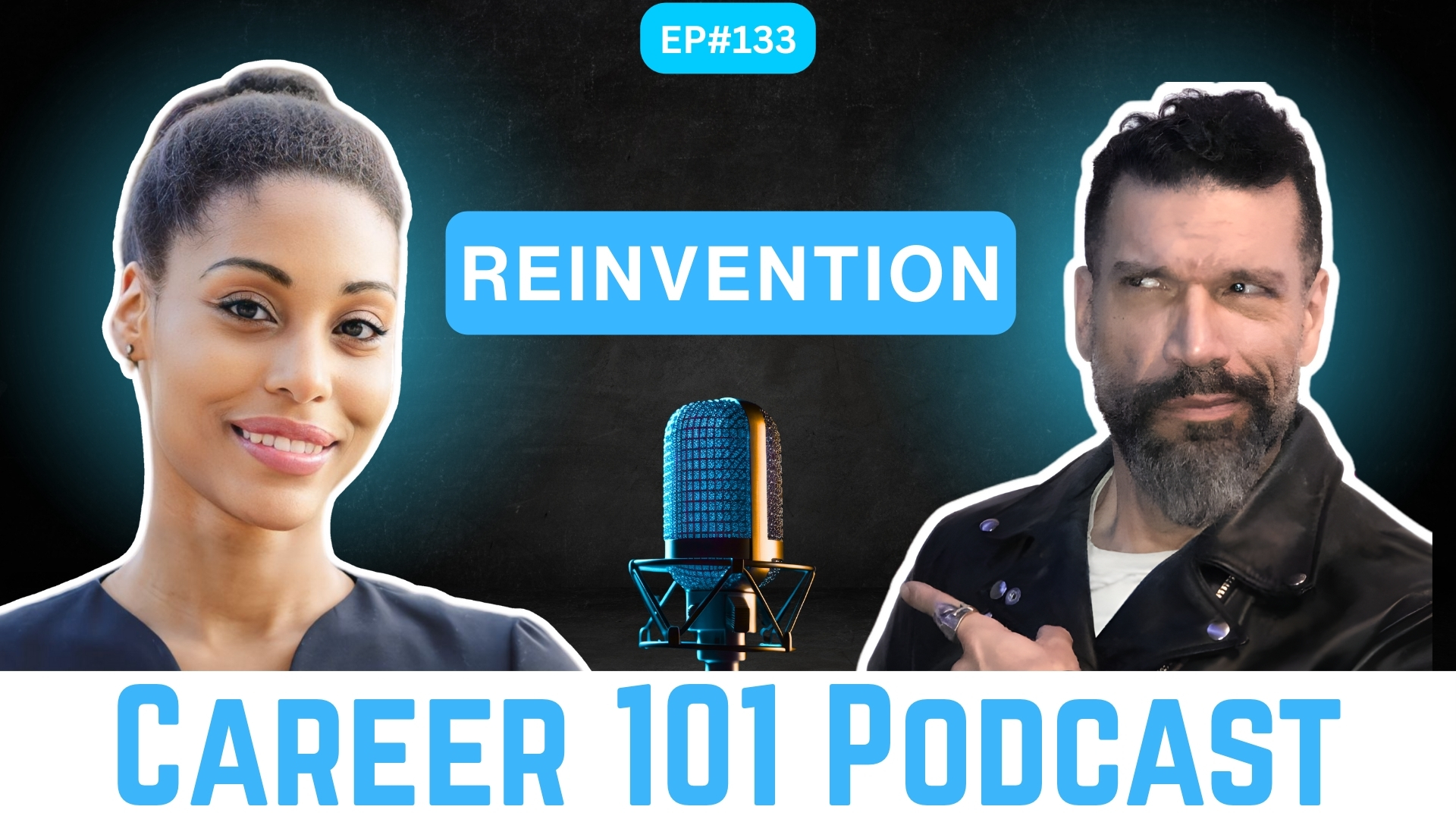
Reinvention takes the spotlight in this episode. CEO host Porschia and guest Scott Mason discuss why holding onto “safe” jobs can backfire in today’s shifting market, and how intentional change can align your work with who you are. You’ll receive clear steps on how to listen to that inner call, choose courageously, and take action for a career change.
They share a practical definition of reinvention: moving from a KPI-driven identity to purpose-driven impact. Scott reveals how mindset and personal narrative shape your decisions, using story archetypes to uncover unhelpful beliefs about money, status, and failure. Then, he lays out your first actionable steps, starting this week.
Real reinvention unfolds over months, not days. Prepare for a 3–6 month journey of discovery, messaging, and launch. You’ll also discover why charisma is crucial during transition, helping you attract support, communicate your value clearly, and build forward momentum.
Scott Mason is known as “The Myth Slayer.” A Columbia Law graduate, former C-suite executive, two-time TEDx speaker, and coach to leaders making high-impact pivots, he guides attorneys and executives to align with purpose, craft a compelling problem-solution story, and lead with presence across teams and markets.
What you’ll learn:
- Why reinvention trumps “safe” job moves in a shifting market, and the hidden risks of staying put that many leaders recognize too late.
- A clear definition of reinvention: trading title-chasing for purpose and impact, plus a quick check to see if you’re stuck in KPI identity mode.
- How unseen stories about money, status, and failure influence your choices, and one prompt Scott uses to reveal the narrative driving your career.
- The realistic 3–6 month timeline of successful career transitions, including the step often missed that quietly stalls offers, even with a strong resume.
- Why building everyday charisma helps gather sponsors and resources, featuring one small communication shift that makes audiences lean in.
- Start-now tactics to create momentum this week for your own reinvention: map options, run tiny experiments, and use quick feedback loops to turn a small win into a path forward.
As a thank you for listening to this episode of the Career 101 Podcast, we are sharing our FREE master class – Career 911: Solving the Top 5 Challenges Executives and Professionals Have! It’s a training based on solving the common problems our clients have experienced to reach their goals. You can get access to the master class here!
Resources:
- Episode Transcript
Porschia: [00:00:00] Hello, I’m Portia Parker Griffin, and I wanna welcome you to the Career 1 0 1 Podcast, a place for ambitious professionals and seasoned executives who want an edge in their career. We’re talking about all of the things you were never taught or told when it comes to career growth, development, and change.
Now let’s get into it.
Today we are talking about career reinvention with Scott Mason. Scott Mason is the Myth Slayer, an attorney two times C-suite executive and coach for organizational leaders looking to step into leadership worthy of Mount Olympus. Working with Scott, they will ignite professional, rebirth, inspiration, and bold impact in themselves and their teams.
After graduating from Columbia Law School, Scott worked for over 20 years as an [00:01:00] attorney and senior executive in the government and nonprofit sectors. As an entrepreneur, Scott successfully grew and scaled a small manufacturing company into a two city operation with clients. That included some of the most recognized.
Corporate names before founding his current coaching and speaking business. He is a two-time TEDx Speaker, six-time podcaster hosts a YouTube channel focusing on leadership and is the author of the upcoming four book series, the Myths Slayer, A Leadership Epic, which retells Greek myths as Actionable Leadership Parables.
That has got to be one of the most interesting bios I have ever read, Scott, I feel flattered. So we are excited to have you with us to discuss career reinvention, but first we wanna know a little more about you. So tell me about 7-year-old Scott. [00:02:00]
Scott: 7-year-old Scott was living. On the planes of Kansas out, what on earth was happening port, like how did that, how is that even possible?
You know, I. Look, I am biracial. I was born in England, adopted by two African Americans who decided that they wanted to settle in Wizard of Oz, pre Oz territory. And it was a place where I was very much an outsider. There was no one that looked like me even within my own extended family. And there was.
It wasn’t an intellectually stimulating environment. It was a safe environment. It was a fun environment, but it wasn’t one that encouraged creativity, imagination, or really the ability to think about your life in the most expansive way possible because there just. Weren’t a lot of career options that were available in [00:03:00] that time and place.
So 7-year-old Scott would go out and look at the vast star fields above the plains and dream about another place where he could go and live and be happy. It was a big city and there were lots of exciting things going on, and from that day I set an intention to be that kid that grew up and got to live in that city.
And lo and behold, somehow Porsche, I don’t know exactly what occurred. It happened, and here I am getting to talk to folks like you.
Porschia: Well, I love it. You definitely made it to New York City and Columbia University as we heard. So tell us about some highlights or pivotal moments in your career before you started your business that you have now.
Scott: An interesting pivot occurred when I was in law school. Hmm. After I was there two weeks, I realized that I couldn’t stand it. It was one of those things where the attention to detail that was required [00:04:00] paying a lot of your mental energy or putting a lot of your mental energy into ensuring that this case nuance or that subsection of blah, blah, blah law.
Could be clearly applied to the details of X, Y, Z factual situation and differentiated and some, it just wasn’t the sort of thing that lit my fire. And I remember talking to my folks about it and saying, I’m unhappy. I don’t know if I’m gonna be able to make it through law school. I just, I hate it. And they were like, look, you have come this far.
You got into Columbia University from Kansas. You cannot back down. Finish it. You’ll be glad that you did. Looking back. That actually was a pivot. It was a pivot that may not seem like a pivot because it, a different action was taken, but a choice was made to continue with something that I didn’t feel called to in my spirit, and in fact, I felt was fundamentally aligned against to and [00:05:00] what I was most deeply inside.
So that was. Pivot or transition number one moving forward as almost like a passive sort of transition or pivot or way of shifting the future that later came to be when I made my first, or. It later came to be at in a much more expansive way. When I made my first major career pivot, I practiced for 20 years nearly as a government official, and in-house counsel working on massive projects that were interesting and looked on the resume.
Great. But eventually that inner tension that went all the way back to law school started to push itself out more and more. I did something everyone says you’re never supposed to do, which is. Quit my job in the middle of a recession when there was massive unemployment. This was around the time of the tail end of the Great Recession, [00:06:00] and try and find a different place and space for you on your own.
It was risky. I was unemployed for a while. It was scary, but that was the. A change in my life that ultimately set the stage for everything that was to come afterwards and the decision that I made that I’m more glad about than anything.
Porschia: It’s very powerful, Scott. A couple of things I wanted to touch on.
I really loved how you mentioned that, you know, finishing law school was a pivot, but it was also a choice and I don’t think that we’ve ever really touched on that, but. The pivots in our career can actually just be a choice, making a choice. And I definitely remember the recession. I was graduating from undergrad at that time, and professors at the University of Georgia where I [00:07:00] attended, they said.
It’s easier to get into grad school than it is to get a job right now. So you all should go and try to get your master’s degrees. Like that’s what they were telling us. My gosh. And so, yes, I remember the time period. You have such an interesting background, Scott. What motivated you to become a coach?
Scott: I went on after that.
A career transition that I mentioned earlier into ultimately another legal and operational job in another sector. But I still was unhappy. I left that job to found my first business, which was a manufacturing company after I had been with the business partner that co-owned that manufacturing company with me about two years as we entered the third year that.
Inner call started to reemerge. I felt as [00:08:00] though Porsche, the only way to describe it is I was being pulled by some sort of string attached to my heart in one direction, as well as pushed from behind in that direction. It was in a different direction than my business partner. It was in a different direction than I had ever been before I went.
On my own separating from my business partner and that business telling him I will figure out what’s to come next. I have no idea what it was. I had to do some soul searching, but people began to reach out to me almost immediately when they heard, I left and said, I want you to do with my business. My professional life, what you were able to do with that prior business and your own professional life.
So I quickly began to get clients [00:09:00] that then led me to say, okay, if the market is saying I’m in this direction, if Providence, the universe, fate, whatever you call it, is sending me clients without me even having to ask and having them pay what I’m asking for without even. Arguing, maybe I should pay attention to that.
I found it more gratifying and it did tie into the skills and experience that I had while putting me in waters that were more deeply connected to a purpose. Now, what that consulting and coaching business looked like radically changed over the next few years, but nonetheless. All of that coming together was what enabled me to swim in that direction.
The one thing that I’d like to leave your audience with about that Porsche is that it wasn’t me sitting and doing a rational calculus. It was allowing the universe to bring to me what it [00:10:00] would While I followed the inner oracle, so to speak that was pulling me away from where I was. In a different direction and allowing the space for me to either figure out what it was or for what it was that I needed to be, to arrive.
Porschia: Wow. I will zero in on when you mention, you know, that inner call and I think that you, one, I think being still enough to hear that call, which I have realized that with clients, and maybe you see this too, sometimes they’re so busy or there’s so much going on in their head and in their mind and in their life that they completely miss the inner call.
They don’t even hear it. They, they overlook it. So I wanna definitely acknowledge you for that. We’ve talked about how to reinvent yourself on the podcast before in episode 37. I [00:11:00] also see and can hear that you have reinvented yourself throughout your career. So, before we get into deep today, I wanna know why do you think the ability to reinvent yourself is important?
Scott: So I initially went into government work because I had an interest in public policy. However, one of the things that I rapidly thought I had discovered once I was in it was that it was quote unquote safe. I’m not gonna sit up here and trash government work. There are a lot of hardworking, dedicated people that have specialized knowledge that really are contributing to the betterment of society through government work.
However, there are a lot of people also that love working in government because they know I. It’s very difficult to get rid of you, [00:12:00] and so you can have a great work life balance. You can make a lot of mistakes. You can be absent a lot. You can screw up a lot. You don’t have to develop your skills. You can become comfortable and coast through those jobs for 20, 25, 30, 35 years and then retire.
Quite comfortably, and that’s something that at first I thought would be a matter of great appeal. I would be safe. However, on to your topic, being ready to pivot or be in a space where pivoting is part of your mindset, that is a lie. Many government employees, thousands, if not hundreds of thousands, thought they would be safe until one [00:13:00] day they woke up and a newly created commission had arranged for them to be fired.
The news is full of very angry people whose lives have been turned upside down and who say I do not have the skills, experience, or background to pivot my career with the government ended abruptly. I had to learn how to pivot, but also I had bosses that were less than positive. And one of the things that those bosses gave me that were gifts was the ability to say to myself, I’ve got to pivot simply to get out of this.
So the curse of toxic workplaces ended up giving me. A blessing in advance of the necessity driven drive and ability to pivot. That came in handy when I suddenly was in a situation where I needed to pivot out of a [00:14:00] life that I thought would be secure forever. And now. It’s been an even bigger blessing because I hope to be able to help as many of those folks who are feeling every bit as lost and afraid and confused and doubtful of their own ability to pivot as I might have been through my own experience.
Show them that they can do it, and not only that, but they can learn and be prepared to pivot in the future because safety, I don’t think there’s, I don’t know how you feel about this Porsche, and I’d be quite curious to hear, but I think the days of any job being safe. Over permanently.
Porschia: Oh, I, you, you said a whole lot there, Scott.
To start with your last point, I completely agree. The illusion of job security, I think that veil has been lifted for a lot of people. And you know, we’ve seen this, I think really since the pandemic from, you know, just. You know, some in [00:15:00] industries, there was a boom, some industries, there was a bust, there was a lot of reorgs, a lot of layoffs, and mm-hmm.
That, you know, really organizational transition that has continued, I think even until today. And then, you know, to, to your point, government economies, like things change. And so, I’ve been a coach for, gosh, a long time now and over a decade, and I would completely agree with you. You know, when I first started there were some clients who wanted the safe quote unquote safe jobs.
And nowadays I think most people realize that that doesn’t really exist and. Also, we didn’t even touch on the technology, the disruption, the ai, you know? Mm-hmm. All of that too adds another layer to that illusion of job security. And so yeah, I, I completely, completely agree wholeheartedly with [00:16:00] that.
You made a lot of. Other great points too, Scott. One I, another one I wanted to zero in on is I love how you said, you know, the blessing of the toxic work environment. So I have starred in that movie and I’m sure many of your, many of my clients have starred in that movie. And while. We can sit and describe how toxic a work environment is, how bad a manager or a leader is.
When you get to that epiphany that, that you shared in terms of that being a blessing to realize, hey, maybe it’s time to reinvent yourself, maybe it’s time to pivot. And not necessarily stay in that place of. How toxic the environment is, and it could very well be completely toxic. So thank you for sharing that.
So all of that to say, Scott, what is your definition of reinvention?
The Career 1 0 1 Podcast is brought to you by Fly High [00:17:00] Coaching, where we help our clients thor to their full potential. More and more professionals and executives are setting out to achieve their career goals, but without the right support, it can be difficult, if not impossible. Whether you need career coaching, interview coaching, or a program with a professional resume and a LinkedIn makeover, we’re here to help.
Could your career use some 9 1 1? It’s not uncommon for executives and professionals to feel a little overwhelmed, stuck or confused when it comes to their career or income. There are other people who wanna know. How to ramp up their success consistently, achieve their goals, and make a bigger impact.
After hundreds of clients came to me with the same issues, I started recording the patterns for the Career 9 1 1 Masterclass. Solving the top five [00:18:00] challenges executives and professionals have. In the free masterclass, I share the exact strategies our clients use to tackle the top five problems. Check out the link in our.
Show notes.
Scott: Reinvention. I will define that in an idealized way. Now, there are times in which people reinvent themselves for the worst. I want to just make it very clear, I’m not talking about that, and that sort of thing might be, for instance, someone who goes through a severe trauma or some sort of severe abuse and it breaks their spirit in one way or another.
That can lead to a reinvention, but I cannot imagine that you or your audience are seeking advice about how to have that happen. As tragic as it may be, and that isn’t to make light of it, but it’s, it’s just being very clear about the language that we’re talking about in response to this [00:19:00] really complex and, and seemingly simple question, but actually quite deep.
A true reinvention is one in which you align with your highest self and the optimal universe of possibilities that that ideal self can bring you to. So what that means practically is. You are someone who is stuck in the mundane or you’re feeling frustrated because you know really in your current career, you’re just a KPI or an output number, and the minute your outputs go down, or the minute your KPIs don’t look that good or your revenue numbers slip, you are [00:20:00] either going to be outright put out the door or.
Or, you know, get some sort of negative career impact. If that is the space in which you are operating, it is impossible that you are truly connected to your higher self because the highest self that we each can be, our most self-actualized version is that version that is fully embracing the completeness of our humanity.
Reinvention is moving from a place in which you are merely measured by the purported value that you mean that you bring into the room in any set period of time into one in which your actions are fully expressing the range of value that you are bringing at all times. [00:21:00] And you understand that you’ve been reinvented because you feel that connection.
You feel that you’re doing what you’re doing because that is what you are meant to do. And the other stuff really is something that you can detach yourself from without fear and with a sense of forward purpose. I have a friend who is. One of these long-term government employees that we mentioned. This person is someone who absolutely loves zoning and land use issues.
She’s an attorney and her whole purpose in life is to help the world be a safer place for those when we are inside of buildings or if we’re have any part of our lives inside of a structure. And. [00:22:00] She doesn’t really care whether she, you know, she has a bad boss or, you know, whether on any given day she’s made the right decision or, or put together whatever sort of brief in whatever timeframe it needs to be.
She doesn’t care because she knows that whatever happens in any given situation she’s in, she will, just going back to another word that we’ve used, pivot into another version of the same thing, and that then is someone who may have started off in a completely different life and career altogether, but has successfully reinvented in the sense that I just described to you.
Porschia: Yeah, that’s a great example. So over my years as a coach, I’ve seen many executives and professionals struggle with career reinvention. Yeah. I think that part of it is because the concept of a reinvention can seem, you know, big, scary and abstract. [00:23:00] What do you think is a good first step for someone going through a career reinvention
Scott: our lives? Especially our career arcs are driven by the narratives that we tell ourselves. The myths that ultimately define the the trajectory of our future that are interconnected with the present or our perception of it, and our perception of the past. What. Are the narrative arcs that you are and have been telling yourself about who and what you are as a professional and a person, what you are capable of as a profession, professional, and a person.
What brought you to where you are? [00:24:00] As a professional and a person and more. Once you understand that arc, there is a framework that I use with my own clients that helps them understand whether these narrative arcs are toxic or not, and the narrative arcs that keep people from feeling safe or comfortable or bold enough to step into a career reinvention usually can find themselves nestled within these narrative archetypes.
If you identify it and understand that, then you have taken the first step to be able to shift your subconscious and the story that you’re telling yourself, and then the other steps that may take you on that journey of discovery to figure out what your career invention might look like, where it might take you and.
What you are willing to do, how much risk you’re willing to tolerate in order to get there all flow from.
Porschia: Yeah. [00:25:00] So it sounds like you’re saying it’s a mindset thing, right? It’s about figuring out that narrative arc that you’re telling yourself that might stop you before you even get started, right? So.
Scott: Porsche, I’ve gotta say, and it’s funny you had a smile and a little bit of a shake of your head when you said mindset and you know it, it can sound like it’s a little bit of a cliche. It can sound like it’s a little bit woo woo or soft, and it’s not a rational calculus, but there is real meat there. Why?
Because at the end of the day. Two things. One, what makes us feel dehumanized is what we talked about earlier, the end game of a purely rationalistic approach to what we are professionally, which is again, rooted in things like KPIs or productivity metrics. That’s not who and what we are. So understanding that that’s not adequate.
Itself or buying into that as [00:26:00] evidence of our worth and who and what we are is itself a mindset issue, but most importantly, even beyond all of that mindset, the subconscious ultimately drives all of our decisions. At the beginning of this discussion, we talked about decisions pivoting or changing, being choices to stay the same.
Or to make a change, a small one, a big one, or whatever. Again, what’s driving our choices? The science behind this is very, very clear. Most of the time our rational thinking, conscious minds are merely justifying the behaviors of the subconscious mind. The only way to get to the subconscious and open it up is through mindset shifting techniques.
And I’m sure as a coach, you, you have dealt with this a zillion times yourself. I can’t imagine.
Porschia: I, I completely agree with you. Some of our listeners know that I have an undergraduate degree in psychology and then a master’s [00:27:00] in industrial and organizational psychology. So I am all about the, the inner game that’s going on.
We have had a mindset series on the podcast before, and you know. Some of what you were saying makes me think that that might be, if, if any of the listeners are really latching onto that, they might be interested in episode 78 where we talk about mindset and the fear of failure. Because it also sounds like some of those narrative arcs that you were mentioning could be negative, right?
And thought Oh yeah. And lead to that fear of failure around even making a, a career. Reinvention or pursuing that. So Scott, from your perspective, what are some of the biggest challenges you’ve seen executives and professionals have with a career reinvention?
Scott: A fear about money that. When it comes to these toxic narrative arcs, or what I call toxic myths, [00:28:00] one of them is the doomsday myth.
It is the idea that taking an action or making a decision will ultimately lead to a professional or personal cataclysm, and fear of losing money falls directly into that category. It may also manifest itself through fear of the. Of of, of social cataclysm. Everyone will view me as having downgraded myself or I’ll lose social standing.
So I consider those two sides of the same things. Also, I see people having fears of failure that. Is to me often the easiest one to conquer, because let’s face it, if you’ve made it in your career already, you have what it takes. It’s just a matter of transferring the things that led you to be successful in the first place and maybe adding on a few skills or subtracting a few weaknesses and getting you where you need to be.[00:29:00]
And finally, there are people who fear. Career reinvention because they have tied their identity too tightly to that career. I call that the tragic origin myth in one way or another. If you view your career as part of your identity, rewriting your narrative to put you in a different space of identity is really rewriting your own origin story.
If you understand that, then you can be well positioned to be able to self identify as something else. Sever yourself from the over correlation of identity to, to profession, and make some big strides in that direction towards reinvention.
Porschia: Those are all great points and things that I have seen in the past as well.
So let’s say Scott, someone’s [00:30:00] listening to this episode and they are going deep with you. They you know, want to pursue a career reinvention. How long do you think it would take for someone to go through a career reinvention?
Scott: Look, if you really wanna reinvent in the way that we discussed earlier, as opposed to your idea of a career, invent reinvention, being I’m a general counsel now, let me be in-house counsel. Somewhere else, right? Like, or I have been a an accountant for x, y, Z number of years now let me go and work as a CPA inside of a nonprofit, right?
That’s not what I’m talking about. To me, that’s just a job switch, and it’s a matter of identifying some tactical objectives and taking some steps to polish up your resume or your LinkedIn profile or both. And just interviewing a real invention requires. Deep thinking, and I will [00:31:00] be blunt with those that work with me a few months.
It can be six months, but think about it. It can be even a little bit longer sometimes, depending on how far you want to go and how quickly you are able to coalesce your thoughts and how creative and far you’re willing to take yourself in terms of what that reinvention may look like once you understand.
What that reinvention looks like. Then you’re positioned to be able to shift into a messaging space and build out a plan, and from there it actually can happen pretty quickly. I. Not instantly in market conditions. The hiring process, how far you want to go, what are non-negotiables or things that you are not willing to tolerate within any circumstance at all.
All of those play into it, but once you have the direction and your messaging and then a plan in place you’d be shy. [00:32:00] Look, I worked with a client who was. Unemployed for two years and felt this sense of confusion and lack of direction and. We worked together, I would say probably about five months to really understand who he was, what he’s looking for, what he needed, what he didn’t, all of this sort of stuff.
As we went towards the end of that self-discovery process, he ended up. Quite quickly getting the job of his dreams. And by the way, it was close to a six figure salary. Not bad for someone who’d been unemployed for two years, and by the way, only had a college degree, quote unquote, only had a Hal college degree.
He didn’t have an advanced degree, he wasn’t a doctor or an architect or an attorney or something like that. So it can happen more quickly than people might anticipate. Once you know what you’re doing and where you’re going.
Porschia: I agree. I agree. And just to add on, I think it also goes back to mindset, how quickly you are willing to take action, right?
Yeah. [00:33:00] All of those insights, right. That you’re, yeah. Getting, you know, when working with a coach like Scott you know, to actually put this in place. So tell us more about your business.
Scott: So I work with attorneys who are miserable and unhappy. They know they have a call. They don’t know what it is.
They know that they’re meant to be something greater. It may be stepping from being a random. Fungible associated at a law firm. And they know that they can be a leader, but they don’t know how to get there, what that leadership may look like, or it may be that they wanna move into a, a creative space or, or even a spiritual space.
And they need that guide to help them figure out how to identify what the reinvention should be, what they, what their highest self is, is calling them into what? Their purpose is [00:34:00] with relation to all of those things what again, they are willing to make change in as opposed to not change. In instance, they may not be willing to change where they live because let’s say they have a sick family member who’s under intensive, multi-year long medical care.
Well. That needs to be considered. And then we work with them to figure out how to build their charisma. Anytime you are engaging in a reinvention, you’re going to need to galvanize people and resources behind you so you can make that change. I see you smiling ’cause you know what I’m talking about. And we, you charisma is how you galvanize those resources and those people behind you.
Then we begin to work very focused on. Understanding who they are going to be pitching themselves to, what problem they solve and why they are the unique solution to whomever’s problem. It is that they’re solving, whether it’s an employer or a customer, if they wanna move into their own business, and then, as we discussed earlier, [00:35:00] tie that into their charisma so they message effectively and build out a plan to make some good stuff happen in their lives.
Porschia: I love it. And as you were talking, I was thinking, Scott, you are so charismatic.
Scott: You’re just saying that because you are,
Porschia: I, it takes one
Scott: bird to know another.
Porschia: Well, I appreciate that, but I, I, I definitely think you are uhhuh, very charismatic and we’ll be providing a link to your website and other social channels in our show notes.
So people can find you online. But now Scott, I wanna ask you our final question that we ask all of our guests. Yes. How do you think executives or professionals can get a positive edge in their career?
Scott: Hmm.
We’ve covered on. We’ve covered a lot of points that could give them a positive edge, but since we were just laughing about it a few minutes ago, let’s move beyond the laughter into something very serious. Developing your [00:36:00] charisma is one of the least discussed, but most important skills that an executive can develop that will help them go wherever they need to go.
How many leaders of entire countries have won elections solely based on charisma? How many companies have been built and developed? I. Obsessive followings solely due to charisma. How many CEOs become the face of not just their company, but entire movements because they know how to stand up their completely capturing their essence, their message, their heart.
Opening up that powerhouse voice valve and letting whatever it is they have to say, sing. How [00:37:00] many people will follow you to the ends of the earth if you are able to captivate them with charisma? It is, in my definition, charisma is one of those things that people claim they know or they don’t. There’s no official definition of it, but my personal Scott Mason definition, definition is the ability to command a room in order to achieve a positive outcome.
And if you are able to do that, everything that you otherwise would be capable of doing magnifies infinitely. The answer to your question is Porsche charisma.
Porschia: Well, Scott, you have shared a lot of wisdom with us today, and I’m sure our listeners can use it to be more confident in their careers and with their career.
Reinventions, we appreciate you being with us.
Scott: Thank you so [00:38:00] very much.
Porschia: This episode was brought to you by the Brave Bird Career Alliance, the go-to membership designed for seasoned executives and ambitious professionals with everything you need for career planning, strategy, training, and support. Thank you again for listening to the Career 1 0 1 podcast. I hope you have at least one key takeaway that you.
Can use in your own career. If you enjoyed hanging out with us, please rate, subscribe, and share this podcast. Until next time, here’s to your success.