
Last Updated on April 29, 2026 by flyhighc
Why Strategy Beats Volume Every Time
If your current job search strategy still revolves around submitting applications and waiting for responses, you’re already behind.
If you’re a seasoned executive or an experienced professional who has been grinding through job applications with little to show for it, you’re not alone. And you’re not doing anything wrong. You’re simply using a playbook that no longer works.
The job search landscape for senior professionals has shifted dramatically. AI-driven screening tools, hyper-competitive applicant pools, and a hidden job market that accounts for the majority of senior-level placements have fundamentally changed what it takes to land your next role. The good news is that the executives and professionals who understand this new reality are not just finding jobs, they’re having companies compete for them.
In this post, we’re breaking down exactly why the traditional approach is failing experienced professionals, and the modern job search tips that are producing real results in 2026.
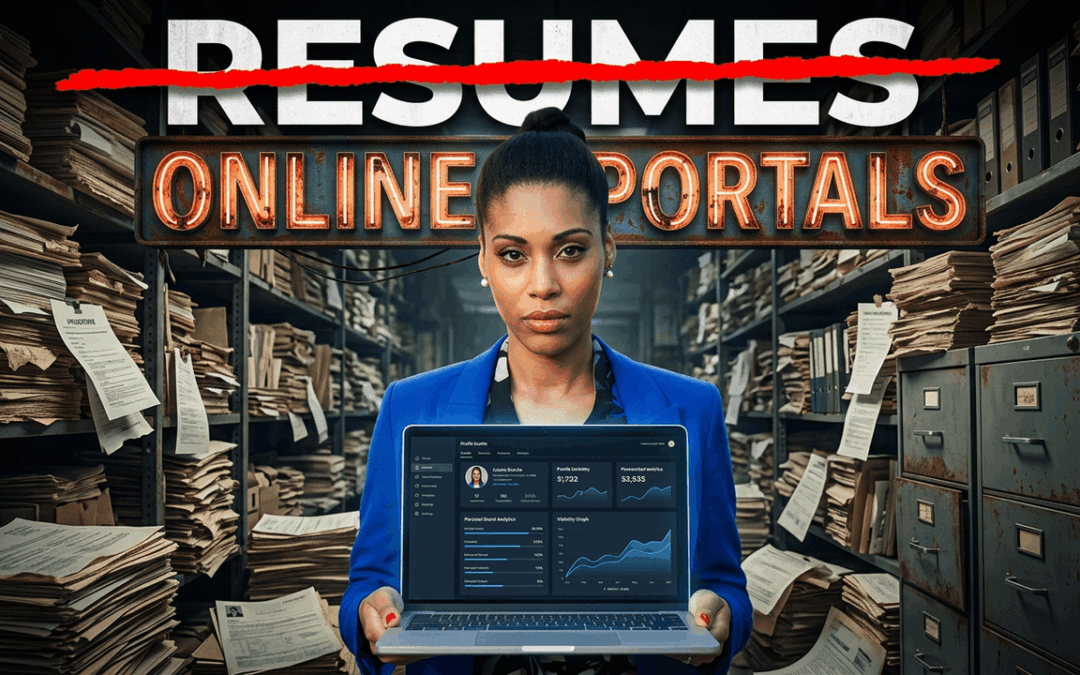
In our latest video, How Executives and Senior Professionals Should Job Search in 2026, we break down exactly why traditional approaches are failing and what high-performing candidates are doing differently to land roles faster.
Why the Traditional Job Search is Broken for Executives & Professionals
Before diving into the job search tips that work, it’s worth understanding the structural reasons why the conventional approach: browse job boards, submit applications, and wait consistently fails at the executive and senior professional level. At senior levels, the hiring process is no longer designed for candidates, it’s designed for efficiency and risk reduction.
Here’s what that means for you:
1. You’re Competing in an Oversaturated Market
Executive and higher level roles routinely attract hundreds (sometimes thousands) of applicants. Before a human ever reviews your background, AI screening tools filter candidates out based on keyword alignment and formatting. Even highly qualified leaders are eliminated early. Getting past the algorithm isn’t just a nice-to-have, it’s a prerequisite.
2. Job Boards Prioritize Activity, Not Fit (they’re built for volume)
For example, platforms like LinkedIn are built for engagement, not precision. That means:
- Recruiters often see active candidates first, not necessarily the best-fit candidates
- Many roles are posted after internal candidates are already identified
- Some listings are “phantom jobs” used to test the market
You may be competing on an uneven playing field from the start.
3. Experience Alone Is No Longer Enough
At the senior level, everyone has strong credentials. Everyone has experience. Employers are increasingly prioritizing perceived value (your positioning, narrative, and brand) over the raw resume. Branding and strategic positioning can outweigh tenure at a prestigious company. What differentiates candidates now is:
- Perceived value
- Clarity of positioning
- Strength of personal brand
This is where most professionals fall short.
4. Phantom Jobs and Passive Strategies Kill Momentum
A growing number of job postings are what industry insiders call “phantom jobs,” listings companies post to test the market rather than actively fill. Applying to these postings leads nowhere. And when your primary strategy is to apply and wait, you lose the feedback loop needed to sharpen your positioning, your resume, and your interview performance over time. Reactive job searching leads to long, demoralizing searches. When it comes to job search tips, there is so much more you can and should be doing.
The Real Problem: Lack of a Job Search Strategy
One of the biggest mistakes executives make is approaching their search reactively. Applying to dozens or even hundreds of roles without a clear strategy leads to:
- Long, frustrating job searches
- No feedback loop to improve your approach
- Reduced confidence and momentum
A strategic job search changes everything. If you haven’t yet built a structured approach, we recommend starting with this podcast episode on developing effective job search strategies:
👉 https://www.fly-highcoaching.com/job-search-strategies/
This will give you the foundation needed to implement the advanced tactics discussed below.
Modern Job Search Tips That Actually Work in 2026
The professionals landing top roles today are not applying more. Modern executive job search success comes down to three things done simultaneously: visibility, positioning, and strategic relationship building. Here’s how to execute on each:
1. Build a Clear Value Proposition
Your value proposition should live in your resume, your LinkedIn profile, your interviews, and your content. It needs to answer: why you, why now, and what will you deliver? Another way to think about it is, “Why should a company hire you over someone else?”
Your value proposition should:
- Define your niche (what you’re known for)
- Highlight measurable business outcomes (revenue growth, cost savings, transformation)
- Tell a compelling career narrative, not just list responsibilities
2. Prioritize Strategic Networking
Networking is still one of the most powerful job search tips, but only when done correctly. Most professionals network with their peers. Experienced job seekers need to network with decision-makers, the people who would actually hire for their target role. Build these relationships before opportunities exist, not after. To do this you use targeted outreach with value-driven conversations, not asks.
Focus on:
- Decision-makers, not just peers
- Building relationships before opportunities exist
- Value-driven conversations, not transactional outreach
Remember: 70–80% of executive roles are never publicly posted. They’re filled through referrals, internal pipelines, and trusted networks.
3. Use Thought Leadership as Your “New Resume”
Your LinkedIn presence is no longer optional, it’s a core part of your positioning. Recruiters and hiring executives increasingly review a candidate’s content before deciding to reach out. Consistent posts within your niche build authority, trust, and recognition over time. Post insights, not just milestones.
Effective candidates:
- Share insights within their niche consistently
- Demonstrate how they think, not just what they’ve done
- Build authority and trust before the interview stage
4. Work with Recruiters Strategically
Recruiters don’t “find you a job.” They match marketable candidates to opportunities. Your job is to be marketable first. Build relationships with specialized recruiters in your niche, stay visible and relevant in their world, and follow up periodically with updates so you remain top of mind when the right role surfaces.
To stand out:
- Build relationships with recruiters who specialize in your niche
- Maintain visibility through updates and engagement
- Ensure your personal brand is cohesive and compelling
5. Position Yourself as the Obvious Choice
At the experienced levels, hiring decisions are based on trust, clarity, and impact.
You must:
- Sell outcomes, not responsibilities
- Quantify your results (metrics matter)
- Communicate in business terms, not just functional language
And most importantly…
6. Access the Hidden Job Market – Create Demand Instead of Chasing Opportunities
Since 70–80% of senior roles are never publicly posted, you must be plugged into the networks where those opportunities surface: through referrals, boards, and internal pipelines. Position yourself to be recommended, not just discovered. That requires people to know, like, trust, and respect you. The strongest candidates don’t chase jobs, they attract them.
They:
- Position themselves as solutions to business problems
- Engage in industry conversations
- Maintain consistent visibility across platforms
The Bottom Line: Why Having a Job Search Strategy is Non-Negotiable
Here’s what separates a frustrating six-month or three-year search from a focused, confident one: strategy. Without a clear plan, most professionals default to passive behavior like scrolling job boards, submitting applications, and hoping for a response. With a strategy, you’re actively building visibility, curating relationships, and creating opportunities that haven’t been posted anywhere.
A job search strategy also provides the feedback loop that pure application submitting doesn’t. When you’re actively networking, refining your narrative, and engaging on LinkedIn, you can identify what’s resonating and what isn’t. You can course-correct quickly instead of discovering months in that your positioning was off from the beginning.
The most important takeaway from these job search tips is this:
Job searching in 2026 is not about applying, it’s about positioning.
The professionals securing the best opportunities aren’t necessarily the most qualified on paper.
They’re the most strategic in how they:
- Communicate their value
- Build relationships
- Show up in the market
The most successful executive and professional job seekers we work with aren’t just talented, they’re methodical. They treat their job search like the high-stakes, strategic initiative it is. They know their target audience, they know their value proposition, and they know exactly how to communicate both in ways that land.
Want a Faster, Smarter Job Search?
If you’re ready to stop guessing and start executing a proven strategy, we’ve created a resource specifically for you.
🚀 Download the SMART Job Seeker’s Guide to Achieving Success:
👉 https://go.fly-highcoaching.com/offer
Inside, you’ll learn how to:
- Clarify your positioning
- Build a targeted job search strategy
- Accelerate your path to high-impact opportunities
Watch the Full Video
For a deeper breakdown of these strategies and how to apply them immediately, watch the full video:
How Executives and Senior Professionals Should Job Search in 2026
This is the playbook top candidates are using right now to get hired faster and more strategically.
If your current approach isn’t delivering results, it’s not a reflection of your experience, it’s a signal that your strategy needs to evolve.


Porschia Parker-Griffin
Latest posts by Porschia Parker-Griffin (see all)
- How to Get Promoted: How to Prove You’re Ready for a Promotion at Work - June 4, 2026
- How to Use AI for Resumes (Without Sounding Generic) - May 26, 2026
- 3 Leadership Tips That Make You More Influential at Work - May 20, 2026