Last Updated on December 30, 2025 by Fly High Coaching
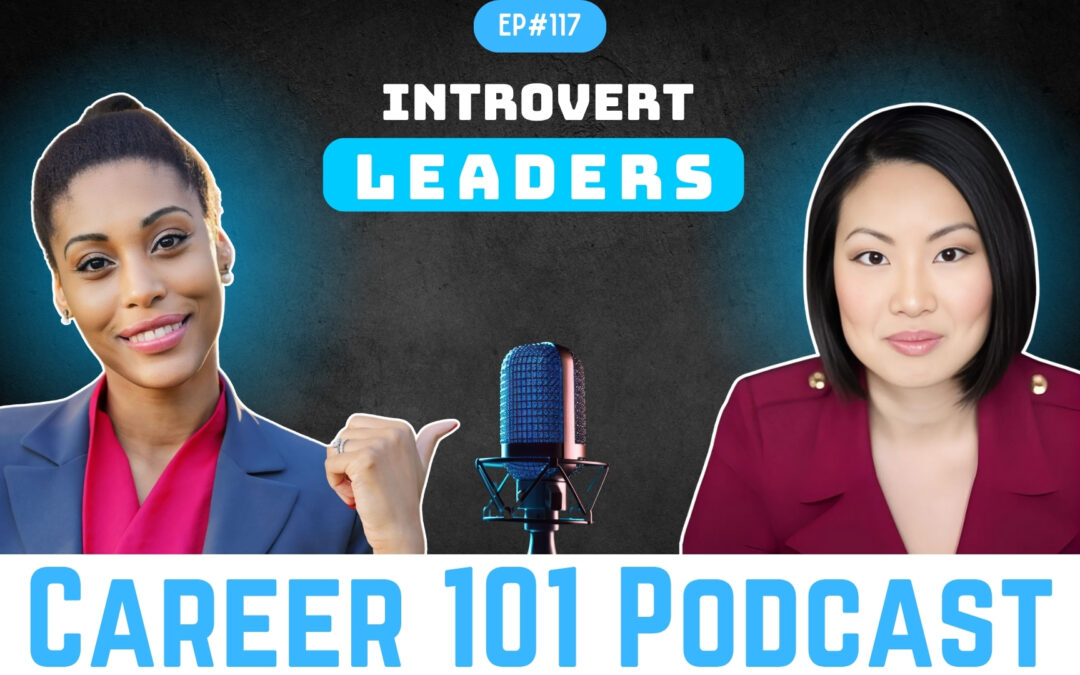
Host Porschia talks with career strategist and leadership coach Julianna Yau Yorgan about building self-awareness, overcoming common introvert challenges, and positioning yourself for career growth without burnout!
Julianna shares strategies for self-promotion that feel natural, including using advocates, journaling, and personality assessments. She explains how to stand out in group settings, gain recognition for your ideas, and close skill gaps through intentional development.
Julianna Yau Yorgan is a former corporate leader with 20 years in Canada’s property and casualty insurance industry. Now a career strategist and leadership coach, she helps introverts achieve professional and financial goals without sacrificing their lives, empowering them to lead authentically and confidently.
What you’ll learn:
- Why introvert leaders don’t need to “act extroverted” to succeed, and what to do instead
- How self-awareness and understanding of your personality guide career decisions
- Authentic self-promotion tactics, including finding internal advocates
- Ways to navigate visibility and recognition challenges in the workplace
- Key tools for leadership growth and personal development
- The important habits and mindset that speed up leadership transformation
- Why small-group coaching is extremely effective for introverts
Resources:
- Episode Transcript
Porschia: [00:00:00] Hello, I’m Portia Parker Griffin, and I wanna welcome you to the Career 1 0 1 Podcast, a place for ambitious professionals and seasoned executives who want an edge in their career. We’re talking about all of the things you were never taught or told when it comes to career growth, development, and change.
Now let’s get into it.
The day we are talking about introvert leaders at work with Juliana Yao Jorgen. Juliana Yao Jorgen is a former manager and director at one of Canada’s largest property and casualty insurers. After thriving in her 20 year corporate career, she’s now a career strategist and leadership coach helping other introverts thrive in an extrovert’s workplace without doing all the extrovert things.
Hi, Juliana. How are you today? I’m so good. Portia, how are you? I am doing well and [00:01:00] I am excited to have you with us to discuss introvert leaders. But first we wanna know a little more about you. So tell me about 7-year-old Juliana. I.
Julianna: 7-year-old Juliana, I think was a handful, and I’ll retract that I know was a handful because my mom likes to remind me of it very often.
I was a bit of a tomboy. I also loved wearing dresses and stockings, so I know my mom was always so upset because I’d come back from school and my stockings would just be shredded, and she was like, oh no, I have to go buy you more. But I refused to wear pants. I liked like being dressed up and pretty, but I didn’t behave like a princess.
So that was 7-year-old Julianna.
Porschia: Got it. Love the juxtaposition there. So what did you wanna be when you grew up?
Julianna: There were [00:02:00] so many things. I think I was just so interested in the world and all the possibilities. Somehow the way I was brought up, I, I didn’t have a lot of restrictions in terms of what I could and couldn’t do.
So I don’t know. At some point I wanted to be a journalist. At another point, I wanted to be an actress, but that was not to be. Yeah, and I think I wanted to be a teacher at some point considered getting into like computer programming, but I just wasn’t very good at it. So I just tried a lot of different things until I, I settled into studying gerontology.
But realizing it was a very heartbreaking field and just got a corporate job in data entry and went from there.
Porschia: All right. So tell us about some highlights or pivotal moments in your career before you started your business.
Julianna: Yeah, so I, I think one of the pivotal moments was [00:03:00] early in my career when I realized that I needed to pick something to do that would be fun for me, but also pay the bills.
I think for a lot of people, fun equals what they like to do outside of work. Where for me, fun was something that was interesting and engaging, but a real career choice that gave me opportunity to expand beyond the team. I was on the company, I was on, the industry I was on. So I talked to a lot of people at my company and discovered this world of projects.
And that was really interesting for me because I could learn a core skillset but then apply that to exactly that. Different industries, different companies, different projects, even within a company. And just develop my career from there. From that one choice. Yeah. That sounds
Porschia: great, [00:04:00] and I love how you incorporated fun into the career, and that’s something I want everyone to catch is that it doesn’t have to be either or, and I think maybe you see this as a career coach too, but I think a lot of times clients come to me and they really do think it has to be an either or, and, we do some career exploration and we have different programs and whatnot to try to incorporate that fun and that passion into what they’re actually doing. So what are your thoughts on that?
Julianna: Yeah, like I said I think a lot of people think that fun absolutely has to be something that they, I. That isn’t a normal traditional career choice.
Like you said it seems very binary for a lot of people where you can have fun and be a starving artist or you can be miserable, but make a bunch of money. And I think part of that is we’re being forced so early. [00:05:00] In our lives to pick what we wanna be for the rest of our lives, what we want to be when we grow up, that we don’t really have the time or the maturity to explore everything that we could do in the workplace.
So I think for a lot of people, whether you’re early career or mid-career or even late career, never stop thinking about what else is there out there for you. That could be. More fun, more engaging, more fulfilling, and how, what kind of skill sets, how do you upskill yourself so that you’re valuable and can earn the money that you need to Love it.
I love it.
Porschia: So you have a very interesting background. What motivated you to become a coach?
Julianna: Yeah, so my path I think wasn’t the same as most coaches. I think. A lot of the coaches I’ve met either followed a fairly natural path [00:06:00] into coaching. So they were in HR or organizational development, something corporate that led them to their own career prac practice, or they were people who.
Wanted to change and decided to start coaching more the second for me. But the catalyst wasn’t that I left corporate on my own, but my husband was off, offered an opportunity that took us from Canada to Spain, and I was left with a problem of what I would do while I was waiting for a work visa.
So I thought, okay, one thing that I can do is maybe some contract work for project management, but seemed a little boring and seemed like not a great use of this opportunity. And because one of the things I enjoyed most about leadership was helping others develop in their careers. I thought this is a great opportunity for me to use a [00:07:00] skillset that I have to serve a niche of people who.
Don’t usually get a lot of support or they get support that maybe doesn’t necessarily feel comfortable to them. Because I, even in corporate, I did get a lot of people coming to me because they were like, wow, I, I didn’t realize you were an introvert. How are you such a successful leader? How are you getting attention?
How are people taking you so seriously without you? Jumping on desks and making all these grandiose speeches or having to talk over everyone or needing to be the loudest person in the room. So just from the experience that I had in corporate, I thought, okay on my own, I can do the same thing that I did for people there.
And that’s how it started. Yeah,
Porschia: so we’ve talked about understanding your personality on the podcast before on episode 90. Before we get into deep today, I wanna know why do you think understanding your [00:08:00] own personality is important?
Julianna: Yeah, I think for your career to be successful, knowing yourself is really critical because you need to be able to.
Understand what works for you and what doesn’t. What’s natural for you and what isn’t. And then from all of that, figure out what is your growth opportunity? Where is it that you can grow, and where is it that you don’t actually care about growing? Then for that bit that you don’t care about growing, is that going to hold you back?
And is that something that you need to challenge yourself on and say, okay, maybe it’s not important to me, but is it important enough for me to develop the skill, change this behavior, whatever it is that needs to be developed, [00:09:00] if I actually want to be successful in my career? And then if. If it’s not important enough, that becomes a different question of is this career path the right one for me?
If that’s not the development either personally or professionally that I want to take on, am I still on the right path? For me,
Porschia: I really like how you explained What I think of, generally is self-awareness, right? That comes from understanding personality. So what is your definition of an introvert?
Julianna: Yeah, I think from a lot of discussions about introversion, that definition has developed over time. A lot of people think that it’s just about being really quiet or being really shy. I personally would describe as an introvert, as someone who needs a little bit more time to reflect and. [00:10:00] Prefers one-on-one or smaller group interactions, but doesn’t necessarily suffer, I’ll say in larger groups.
So I, I know a lot of people who are surprised by introverts who find it.
I know a lot of people who think that introverts are intimidated by public speaking or very uncomfortable socializing, and that’s just not true, right? I, myself, yourself, a lot of people I know are actually podcasters and introverts. It’s not that we don’t like conversation. It’s not that we don’t like the attention, it’s just that, we need to design the environment for one that’s comfortable for us.
Porschia: Yeah. I think you touched on a lot of great points there. Generally when people ask me, I just describe it as I. When someone’s an introvert, generally they are more stimulated by their inner [00:11:00] world, so they get energy internally from their thoughts, feelings, ideas and a lot of time.
Extroverts, on the other hand, they are more stimulated by the outer world. So other people, activities, sight sounds. And one you made me think of something I say to people is that I say I’m not the life of the party type unless it’s my party. And if it’s pretty, then I am right. So I totally get it.
I think we might know the answer, but I wanna know, specifically I wanna ask you this question. Why did you decide to focus on introversion as one of your areas of expertise?
Julianna: Yeah. So as most coaches and business owners do, we always try to find that one segment of the world that’s underserved.
And in talking to a lot of people about their careers, that seems to be something that’s not talked about very much, is [00:12:00] how to be an introvert and still be successful. So not necessarily have to do the things that are not necessarily just uncomfortable, but so viscerally wrong for that person that it doesn’t feel right, like that.
It feels like they’re an imposter because they’re doing something that is so out of touch with their natural being. And it just makes me really sad that there are people out there who are. Perfectly capable, could do a great job and be recognized for it, but are being coached to do things under the guise of pushing themselves outside their boundaries rather than having an option of a coach who does work with introverts.
Now, the amazing thing is that since I’ve started that work, I’ve found that there are so many coaches who work with [00:13:00] introverts, which is. Amazing. Like I love that the option is there and that there are multiple coaches that you can select from. But I also find that people really resonate with that message and it allows me to be more natural as well, so that I don’t necessarily need to pretend that I’m an extrovert or market myself in a way that feels uncomfortable because.
My, the natural way that I coach, the natural way that I reach out to people who need support has that kind of natural connection to the type of person who would benefit from my coaching. I.
Porschia: I think that was a perfect lead into my next question. Many introverted executives and professionals struggle with being their authentic self while progressing in their career.
So how do you think introverts can be successful with their career growth? [00:14:00]
Julianna: Yeah, I think the biggest thing that most of my clients struggle with is. Self-promotion or trying to be recognized for the work they do. So more often than not, introverts are of the mindset that their work should speak for itself.
And we both know that’s not true, unfortunately. It really should. But there still is an element of. Promotion that needs to happen in terms of making sure that the right people know the value that you’re adding to that company so that they see you as someone separate than the masses. They can clearly link what you as an individual do to the business goals and some of the strategies I take with my clients.
Work with their introversion because we know that they don’t want [00:15:00] to, like I said, get up on stage and shout to everybody about how amazing they are. But it could be something as simple as finding the right advocate internally who can speak on their behalf when they’re not in the room, and building that relationship, making sure they’re aware that.
You’re doing all these wonderful things and then trying to figure out why are they my advocate? What is the thing they see in me that can benefit them, and how can I make sure that they get that benefit so that I can also get the benefit of their advocacy? So having another person be the one to do that promotion works really effectively for especially a lot of the executives that I work with.
Porschia: So you mentioned some of the struggles that you’ve seen with your introverted clients in terms of self-promotion and being recognized for what they do. What are some of the [00:16:00] other big challenges that you’ve seen introverted leaders have in the workplace?
The Career 1 0 1 Podcast is brought to you by Fly High Coaching, where we help our clients thor to their full potential. More and more professionals and executives are setting out to achieve their career goals, but without the right support, it can be difficult, if not impossible. Whether you need career coaching, interview coaching, or a program with a professional resume and a LinkedIn makeover, we’re here to help.
Could your career use some 9 1 1? It’s not uncommon for executives and professionals to feel a little overwhelmed, stuck or confused when it comes to their career or income. There are other people who wanna know. How to ramp up their success consistently, achieve their goals, and make a bigger impact.[00:17:00]
After hundreds of clients came to me with the same issues, I started recording the patterns for the Career 9 1 1 Masterclass. Solving the top five challenges executives and professionals have. In the free masterclass, I share the exact strategies our clients use to tackle the top five problems. Check out the link in our.
Show notes.
Julianna: Yeah, for sure. So one of them I think is unfortunately standing their own in a large group, especially with other leaders and particularly other I won’t say extroverted ’cause I don’t wanna pick on them, but we’ll say more stubborn or attention seeking leaders.
Introverts I find tend to be on the side of, I don’t want to cause trouble because it’s all [00:18:00] that external stimulation you were talking about. So if there is a path of least resistance, they’ll take it. But usually that means they’re making decisions that are not necessarily the best ones for their careers.
So a lot of that has to do with figuring out how to position themselves. Not just with their leaders, but with their peers. So how do they demonstrate that they are a leader amongst leaders? How do they make sure that these leaders don’t just see them as a more junior person because they’re more quiet or less engaged or less interested because they’re not as active in a conversation.
Or making sure that they’re getting credit for their ideas instead of someone who happens just to repeat it and is the last person to say it. And then that’s the person who’s remembered as having the idea. [00:19:00]
Porschia: Yes, I have a lot of those, I’ve experienced quite a few of those myself as well. And what I really wanna zero in on, because I think that this comes up in different shades in different ways, is what you mentioned, taking that path of least resistance.
And so I encourage our. Clients to really think about what their top values are or what their top goals are, and really see those as non-negotiables and when you have instances, maybe conversations, meetings projects or presentations and those. Topics come up to prepare yourself ahead of time that, Hey, I’m going to speak up about this or take a stand on this and prepare what I heard one consultant say years and years ago.
And I agree and I would be interested to hear your thoughts on this. He said he could always. And he was a speaking consultant. And he said he could always [00:20:00] tell the extroverts from the introverts because from his perspective, most of the time the extroverts just went and they wanted to wing it all the time.
And the introverts prepared for speaking. In a very different way, more structured, more organized way. And I agreed with that. And so just to help our clients prepare for those moments that might come up so they don’t just default into taking that path of the least resistance. But what are your thoughts on that, Juliana?
Julianna: Yeah I totally agree on that observation, and I think a lot of the times people don’t realize how much time introverts take. I. In the preparation and I’ll call them mock conversations to play through, whether it’s in their own minds or with a coach or a friend, a conversation that they might have, especially a difficult one.
Some of the things I do with my clients, especially if they’re. A little [00:21:00] hesitant to push back or speak up is just play out. Okay. So what if you did do that? Or why don’t we role play and I’ll pretend I’m this person that you’ve been telling me about for months, and we’ll just see where the conversation goes and you can try it on for size to see if it’s a conversation that’s comfortable for you.
And if not, how can we make it comfortable so that you’re still. Standing on your own two feet and not getting trampled by the rest of your peer group.
Porschia: Yeah. What are some of your favorite tools or resources for introverts to help them with leadership? I.
Julianna: Yeah, so journaling is really popular with my introverts.
A lot of the times, especially the ones that work with me for a little bit longer, they’ll actually go off and do a lot of that reflection on their own. Whereas the more extroverted [00:22:00] clients that I have to use our one-on-one time to actually have that conversation and think through.
All of the reflection out loud. So journaling prompts are really popular with my folks. The, there’s so many different, I’ll call them personality tests, but assessments and all of those things that my introverts like as well because it gives them. Something concrete that they can refer back to.
I typically leverage whatever their organization uses so that I can then link it back to whatever their organization thinks is successful for them, et cetera. So we’ll go through and see, okay, here’s the assessment that. Whatever type that your company prefers. Let’s go through this and see where are your development opportunities, but then specifically linking those back [00:23:00] to either their current job, if it’s a new job or if they’re targeting for a promotion or a career change.
Is there something that you don’t have today that you need to develop and that. Very specific analytical work in the gap analysis is a lot of fun for them because it is so concrete and they can see the connection between where they are now and where they need to get to. Okay.
Porschia: Yeah. That’s a great awareness and I love assessments as well.
Our listeners know I’m an assessment junkie. I really like the Myers-Briggs type indicator assessment because it does call out. Introversion and extroversion plainly. Some of the other ones. I think to your point, if you’re utilizing whatever a client has from their organization, you might have to dig through that a little bit more.
But yes, I think assessments can be great. So Juliana, [00:24:00] let’s say that someone’s listening to this and they’re loving the tips and the insights that you’re sharing and they wanna know, how long do you think it would take for someone who’s an introvert to make significant change when it comes to their leadership and perhaps be more effective in some of those areas that you mentioned?
Julianna: Yeah, unfortunately there’s no. One answer. As from coaching a lot of people a lot of that has to do with how much time you have and how committed you are to the process. So I’ve had clients who make a ton of progress and hit all of their goals within months. Because they’ve set aside the time.
This is their top priority. Their career is their top priority for the moment, and they’re just flying through all of the work. They’re ready, willing, and able, and not afraid to try something, have it maybe not [00:25:00] turn out exactly as we expect or hope but then going back and trying it again.
So if you’re in that kind of mindset. Working with any coach, you’re gonna do really well very quickly. For most of my clients though I’d say it’s a longer process because of that introverted nature. They tend to have a lot going on. Their career might not necessarily be their number one priority, maybe just number two.
So we factor that in as well so that they’re not. Pushing so hard that they’re completely exhausted because they’re doing too many things. And for those people, I’d say about six months until they’re seeing some really tangible results because we’re taking things a little bit more slowly then I normally would with somebody who’s ready to go.
Yeah.
Porschia: So tell us more about your business.
Julianna: Yeah. I am what people would call [00:26:00] a freestyle coach. So I don’t really have set programs. I’ve got a lot of tools in my toolbox, and I prefer to take a very customized approach with my clients. I have some one-on-one clients, some in a loose group program, so we don’t have a scheduled, program that you need to follow or root to follow, but it’s more a collection of people who are working on similar goals that I think can benefit from learning from each other so they similar backgrounds or similar challenges that they’re working through. And that group connection is helpful because then they feel like, okay, it’s not just me, someone else is going through this experience.
And those groups are fairly small so that when we have our group calls. They don’t feel like they’re fighting each other for time.
Porschia: And I think that’s great for introverts as well because, and I’ll speak for myself and I, [00:27:00] a lot of clients, sometimes we feel like we can be in our head a lot. And not necessarily bounce ideas off of other people.
So I do think that small group. Programs can be great for introverts. So we’ll be providing a link to your website and other social channels in our show notes so people can find you online. But what’s the best way for someone to get in touch with you?
Julianna: Yeah, I would say definitely LinkedIn. I’m on there a couple times a week.
I try very hard now not to live in there every moment as I’m sure you are doing the same. But that’s probably the best way to get ahold of me or if you wanna contact me through my website, I’m on my email just as frequently.
Porschia: Love it. Since you are another coach, Julian, I wanna ask you, what is your definition of career success?
Oh gosh.
Julianna: Maybe a very personal definition of career success [00:28:00] is, reaching your professional and financial goals without having to sacrifice your life.
Porschia: Love it. I love it. I love it. And so now I wanna ask you our final question that I ask all of our guests. How do you think executives or professionals can get a positive edge in their career?
Julianna: I would say the. The biggest thing is to be as authentic as possible, and that’s probably something you’ve heard before, but there’s nothing else I’ve seen actually in action that gives more impact to a leadership style.
People will remember you for being different, for being bold, for being. Human and it’s really hard to be those things without being authentic.
Porschia: Very well said, Juliana. You have [00:29:00] shared a lot of insights with us today and I’m sure our listeners can use it to be more confident in their careers. We appreciate you being with us.
Thank you so much for having me.
This episode was brought to you by the Brave Bird Career Alliance, the go-to membership designed for seasoned executives and ambitious professionals with everything you need for career planning, strategy, training, and support. Thank you again for listening to the Career 1 0 1 podcast. I hope you have at least one key takeaway that you.
Can use in your own career. If you enjoyed hanging out with us, please rate, subscribe, and share this podcast. Until next time, here’s to your [00:30:00] success.