Last Updated on December 30, 2025 by Fly High Coaching
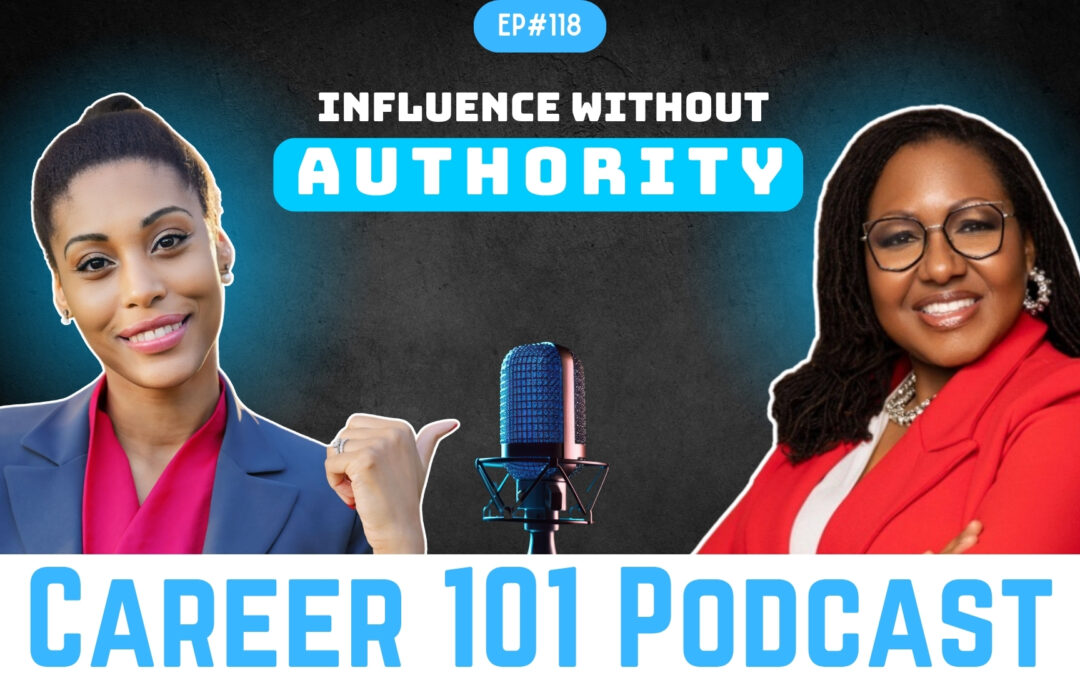
In this episode, you’ll learn how to build informal power, strengthen your personal brand, and create visibility strategies that position you as a trusted leader in your organization. Host and CEO Porschia sits down with executive coach Laura Knights to share actionable steps for influencing through relationships, credibility, and strategic self-advocacy.
They explore why influence is essential for both organizational success and personal career growth, how to identify when your influence needs work, and ways to manage up effectively. You’ll also hear practical examples of building influence as an individual contributor and avoiding common pitfalls like overcommitting to low-value work.
Laura Knights is an executive coach, speaker, and facilitator with over 20 years of leadership development experience. She is the Founder and CEO of Knights Consulting LLC and creator of the Black Woman Leading programs and podcast. Laura specializes in customized training and coaching to create confident leaders, high-performing teams, and sustainable career success.
What you’ll learn:
- What influence without authority means and the three types of power you can leverage
- Why building influence is vital for career growth and organizational success
- Secrets to strengthening your personal brand and increasing visibility strategically
- Practical ways to build informal power through relationships and credibility
- How to manage up effectively and align with your leader’s priorities, for maximum results
- The pivotal role of self-advocacy, boundaries, and emotional intelligence in influencing without a title
Resources:
- Episode Transcript
Porschia: [00:00:00] Hello, I’m Portia Parker Griffin, and I wanna welcome you to the Career 1 0 1 Podcast, a place for ambitious professionals and seasoned executives who want an edge in their career. We’re talking about all of the things you were never taught or told when it comes to career growth, development, and change.
Now let’s get into it.
Today we are talking about building influence without authority with Laura Knights. Laura e Knights is an executive coach, speaker, and facilitator with over 20 years of experience creating personal and professional development programs that have touched leaders all over the world. Laura is the creator of Black Woman leading programs and podcast, and the founder and CEO of Knights Consulting, LLCA leadership development consultancy that provides customized [00:01:00] training and coaching programs to create more confident leaders and high performing teams.
Laura received her Bachelor’s of Science and Business Administration with a concentration in organizational behavior and human resources management from Washington University in St. Louis. She obtained her master’s in social work from DePaul University. She’s a certified workplace critical incident response professional, a certified integrative trauma professional.
A certified practitioner for both the disc and core values index assessments, and Laura holds the licensed clinical social worker designation in Illinois and Georgia. Hi Laura. How are you today? Hey there. Super happy to be here. We are thrilled to have you with us to discuss building influence without authority.
But first we wanna know a little more about you. So tell me about 7-year-old Laura. I.
Laura: Wow. So 7-year-old Laura. [00:02:00] Laura as my mother would say, was a talkative child. Uhhuh. Interesting thing about me I come from a blended family. My parents remarried remarried after both having children, and I’m the only child that my, my parents had together, but my siblings were really young, and so my father used to affectionately refer to me as the knot, the one that kind of.
Tied everybody together, uhhuh by blood. So I was, everybody’s baby, all my siblings spoiled me. I remember being a teenager and my mom would say, you can’t go to the party. But I had a grown adult sibling who had their own apartment. I would just be spending the night over Sarah’s house, and she was saying, you get caught.
I didn’t know about it, but no I would just say 7-year-old. Laura. Laura. Very creative. I was a little poet, used to to write poems and just really loved on by a lot of big Brothers, big sisters and had a beautiful childhood. So what does 7-year-old Laura wanna be when she grew up this poet?
So I [00:03:00] think I probably wanted to be like a singer then, right? Now I only sing in church and in the shower. But I guess being a speaker is not too far off or I used still standing in front of people, but used to love music and dancing and all of that kind of stuff. So not on the world stage singing.
But close enough I guess.
Porschia: Yes. Still using your voice just in a different way. A different way, yeah. So tell us, Laura, about some highlights or pivotal moments in your career before you started your business.
Laura: Yeah I used to think, as a younger professional, I used to think Laura, what are you doing?
Really do a little bit better now, but more of a type a, a professional. And I had some really interesting pivots. So as you read in my bio, I started in organizational development. Then they used to call it organizational. Behavior, but now they call it od. And in HR and doing work in that space.
And I worked in, early corporate experiences doing that work and had a bit of a burnout experience, [00:04:00] was just not feeling that supported was feeling. I. Just that wasn’t the space for me at that time. And one of my mentors, so this is one of the pivotal moments, one of my mentors who had been a mentor through undergraduate was an executive director of a nonprofit organization.
And she got this huge grant in what we used to call a David and Goliath situation. ’cause she was this little bitty nonprofit in Chicago. And the other people who got the grant were like University of Chicago, these huge organizations. And so she got it almost. Surprised it was like a faith move that she applied for it and she’s oh shoot, you wanna come work for me and help me build my capacity?
’cause I gotta hire people and I gotta develop my organization. So as a young professional, with just a couple of years under my belt in a corporate environment, I became a nonprofit executive and really helped her build that infrastructure. That was pivotal for me because it really thrust me.
Although I had the contextual understanding right, of how organizations work, that’s what I studied and was part of my job. But as more of a [00:05:00] junior employee I really came in and worked side by side with her to, triple the size of her organization. So that was pivotal and really getting to apply and really seeing myself as a leader, I think as the first.
Part of my career. And then what also shifted at that time, the work that we were doing was in distressed communities around Chicago. We worked with a lot of young people and I started to see this transformative work we were doing with them. And then we would send them back into their homes and their communities where there was so much community violence and trauma.
And so I actually went back to school during that time and became a social worker and went to graduate school and later became a family therapist for a period of time. But it was a complete shift, right? From that early business kind of degree that I had. But I’ll bring it to a close and say how I think that all culminated is now.
In my work, and I think you referenced it in my bio, I talk about doing the heart work and the head work. And so just those [00:06:00] different vantage points, being a social worker and having that systemic view, being a family therapist and working with families in some of their most difficult times I bring a lot of that.
Skill and expertise I cultivated there to the work I do now in organizations, even though I’m not being anybody’s therapist. I’m still licensed, but I’m not being a therapist. But I think just all of those unique experiences have really culminated to really give me some influence, if you will, for our topic and a unique approach that’s different from some of my peers.
Porschia: Yes, you definitely have a unique approach and a great background. It’s very interesting. Yeah. So with all of that, Laura, what motivated you to start your own business?
Laura: I. Yeah, so a lot of the work we do now in organizations, leadership development, staff training, coaching, team development is work that I actually used to do in my last job before I launched out into full-time entrepreneurship.
Coming from [00:07:00] that work as a therapist. The last kind of employment that I had outside of being self-employed is I used to work for a university, a state university and it was a position that was created for me that was really interesting. They wanted me to bring. Not only that organizational development, staff development piece that I had been cultivating, but there was a unique part of my job that some of the programs that were under my leadership were community-based programming that had social work and wraparound services.
So they wanted someone who had the eye to the core business. But also could oversee, a team of social workers that were also supporting. So it was a really kind of unique hybrid role. And I was a unique profile for that during that time. So I was at the university for 10 years and my title at the time, universities have all of these words was like senior research specialist staff innovation and training or something like that.
And so I used to develop. Programs to develop our staff members to develop their [00:08:00] skillset and expertise. I also used to support staff mediation and conflict issues between staff. So this work that I’m doing now was work I was doing for 10 years inside of a. University as an employee and I would do moonlight or a little side hustle here and there consulting.
And as that began to grow and I saw I had more influence over how I did that work, I eventually decided to just launch out and run my consulting business full-time.
Porschia: Wow. So Laura, before we get into building influence, I wanna know what is your definition of influence?
Laura: Yeah. When I think about influence at a high level, it’s really about how do we drive action and results.
Through the myriad of power sources that we have, right? So some of us have formal power, meaning you are the boss, you have the title, I’m the CEO, I have a team of 11. When I say something, the team listens to me because of the [00:09:00] formal power. But informal power is power. You have through relationships through rapport, through connection.
It’s also how we can drive action and results as well. And then some people have expert power. People listen to you because you got, the stuff, right? And so I think it’s about how do we wield that compilation of power. You may have all three, or just one, or just another one in a way that drives action and results not only for the organization’s benefit and what the business goals are, the organizational goals, but also for you and what you’re trying to achieve professionally as well.
Porschia: I love that definition. And I really like how you explained, the formal, informal and expert power and I’m sure we’ll probably get deeper into that too. Back in episode 14, we discussed how to increase your influence in the workplace. Why do you think increasing influence at work is important?
Laura: Yeah. I think, again, back to that definition where I said [00:10:00] it’s this dual benefit, right? There is not only what you’re able to drive for the organization, right? And we’re there to provide value if we’re working with any organizations, right? And so what we know from a lot of the research is that building influence also helps us to foster trust and psychological safety, which we know are foundational to high performing teams.
It helps us to move projects forward. We have stuff we gotta get done. We have things to sell. We have clients to serve, and so being able to. Use this influence and do that helps us to do that more efficiently and more effectively. And then just for you personally, right there, there’s the topic of political savvy, right?
Which is under influence. And some people think that’s like a four letter word but there’s a spectrum, right? There’s the dark sleazy side, and then there’s this also very positive side of it too. And we have goals, right? You may want that promotion, you might want to be the lead on that project or the.
The one who gets the visibility [00:11:00] for something you’ve really been working behind the scenes on and influence helps you to get those things right. It helps you to achieve your own professional goals as well. I.
Porschia: Love that there’s the organizational side and then also your personal side of, the impact of influence.
So let’s say Laura, someone’s listening to us at, how might an executive or a professional know if they need to work on building their influence at work?
Laura: Yeah, I think so influence has, if we think about influence as a umbrella, it has a couple of different. Things underneath that umbrella, right?
So part of that is your personal brand. And oftentimes people think about driving the narrative of their personal brand. There’s a way I want to be seen, and absolutely you should actively and intentionally drive that, but you don’t really have the final say of your personal brand. Your personal brand is really what people say about you when you’re not in the room.
And so if you [00:12:00] are able to get feedback whether that’s formally through your performance review or informally, you ask people and they share what they think, or you just hear it, chatter. I. If that is not in alignment with how you want to show yourself, that is an indication that we might need to strengthen some influence.
And it may not be bad if it’s out of alignment because it is. I’ll give you an example of a executive coaching client I was talking to the other day. If it’s out of alignment because it’s something negative or. Critical, then we definitely wanna fix that. That means something about our performance or our engagement with people is giving off negative vibes.
We don’t want that. But sometimes it’s not negative. It is just not in the direction you want. So for example, I was coaching someone and they’re really working on their strategic, their high level leadership skills, and when they were getting some feedback. Everything was about how they were so good tactical, in the weeds.
They were great. They their expertise, their technical expertise was acknowledged, and that’s [00:13:00] wonderful. But for this person’s goals now, which is to really be in a C-suite role. That is not really what’s gonna get them there, being the technician. That’s the foundation of it. And so they really came to coaching but I have these other skills too.
I can, stakeholder engagement and all these very more high level things that’s in alignment with my goals of being a C-suite person. But people don’t see that about me, so I need to increase my visibility in that way. So when we say it’s not an alignment, it’s not always that it’s negative.
It could just be whatever you want to do is not how people are seeing or. Thinking about opportunity for you. So I would say if there’s some things off on a personal brand or if you just wanna drive that, as you’re continuing to grow in your career I think that’s something as well. The other thing is that if you just wanna increase visibility in any ways that’s also indicator that, maybe there’s some work we can do intentionally [00:14:00] to work on strengthening our info.
Porschia: Great. Great. So many of our clients are executives and professionals who don’t have authority over some of the people that they work with.
Laura: Yeah.
Porschia: How do you recommend that they build influence in those situations?
The Career 1 0 1 Podcast is brought to you by Fly High Coaching, where we help our clients thor to their full potential. More and more professionals and executives are setting out to achieve their career goals, but without the right support, it can be difficult, if not impossible. Whether you need career coaching, interview coaching, or a program with a professional resume and a LinkedIn makeover, we’re here to help.
Could your career use some 9 1 1? It’s not uncommon for executives and professionals to feel a little overwhelmed, [00:15:00] stuck or confused when it comes to their career or income. There are other people who wanna know. How to ramp up their success consistently, achieve their goals, and make a bigger impact.
After hundreds of clients came to me with the same issues, I started recording the patterns for the Career 9 1 1 Masterclass. Solving the top five challenges executives and professionals have. In the free masterclass, I share the exact strategies our clients use to tackle the top five problems. Check out the link in our.
Show notes.
Laura: Yeah, great question. And it’s interesting, we’ve been facilitating some program, early career programs, more of late and doing a lot of this kind of conversation with some of those folks.
And what I would say is really lean into how do I build. My informal power. So [00:16:00] through my relationships and through my connection. So I’ll give you an example of someone without authority that has a lot of influence. I recently did a two day kind of manager training for an organization. And the only point of contact that I had besides the person who made the recommendation, and it’s like the high level person outside of that, the only, point of contact I had was with someone we would probably say is a early career, more of a junior employee that’s coordinating the trainings, really sharp. Young woman her manager. I hear that her manager loves her, could see her growth potential, wants to invest in her. So her word because the manager has seen her work ethic her output.
The manager leaves a lot of things. To her to do that. Someone else would, maybe the same years of experience, if they didn’t have this informal power, wouldn’t get those type of decisions. So there were a couple other opportunities. She reached out to [00:17:00] me, Hey, can you do this? I’m like, sure. Do you need to double check that with anybody?
Uhuh? Nope. You got it. And she’s going to the contracting with me. None of my other clients. Is it a junior employee doing contracting or talking about. Rates with me, right? And so because she has shown not only the skillset, but whatever that managing up she’s doing with her leader, that the leader is I trust you.
You got it. She is making these decisions. She is having visibility enterprise wide. Because these trainings are for their men and senior level leaders that are across globally, the organization. And she’s the point of contact. So not only is her visibility up. She’s getting to choose the experts that these people see.
That’s an example of influence without authority that came from her informal power. Her relationship and how she was able to show her personal brand with her manager who is a senior level leader. So
Porschia: do you think it’s harder for [00:18:00] individual contributors and people without any direct reports to build influence?
Laura: If it’s formal power, yes. But if it’s informal, I wouldn’t say it’s harder. And I think it’s because it’s around relationships. Might you have to be a little bit more strategic or intentional about it? Absolutely. But it’s around how can I. Through my relationships with people, get them to see the contribution and the value that I bring to the organization.
Sometimes that happens organically. So this young professional I was just talking about, she works with her manager day in and day out. They coordinate on things, so that’s happening organically. When she shows up and delivers other people may institute a coffee chat campaign or strategy.
And have, I’ve supported people in coaching to do this where there are some key people that they’re like, that person needs to know I exist, but there is no projects that would interface with them. And so then they’ve created. A visibility opportunity, which is, in their [00:19:00] organization.
A coffee chat is part of the culture. It’s welcome, it’s an open door thing. They put themselves out there and said, Hey, can we connect? I wanna see how I can support you. But in that meeting, they’re also saying what they wanna do and how they’re contributing. So that’s intentional. I do think it takes some effort though.
There’s a lot of folks who believe that if I come in and just put my head down and do good work. People will notice me. And that’s not unfortunate whether or not it should be based on just pure hard work or not. That’s what we mean by the politics of the situation. That’s just not how it works.
So you have to be intentional about how do I show and communicate the value that I bring. Not only am I great output, that’s number one. But also in the way I communicate, the way I engage with people the way I talk about my work.
Porschia: You said a lot of great things there, Laura. There’s a couple that I wanna zero in on.
Yes. I hear it so much. From [00:20:00] clients and perspective clients, I’m gonna go in, put my head down and my work’s gonna speak for itself. Yeah. Which I’m hear you hear. And. Unfortunately when some of those opportunities come up for projects, promotions they’re not thought of. Yeah. ’cause their head is down.
So thank you for making that point. And I love what you said about the coffee chats, just really being proactive to get on someone’s radar.
Laura: Yeah.
Porschia: And I know that you talk a lot about creating visibility strategies and you’ve touched on it earlier today. I. Heard the coffee chat is one. Yeah. But how else can someone create a visibility strategy to build influence?
Laura: Yeah. I usually say there’s three parts to a good visibility strategy. There’s a visibility goal, so what’s your end game? Is it a promotion? Is it you wanna lead a meeting? Is it you wanna get approval for your company to pay for your, certification? Whatever that is. So one is, I think, getting really clear on.
[00:21:00] How what you want the goal of this strategy to be, right? Even if that’s a long game, right? Let’s say you, you understand that you wanna go to this next level, but it may require two years in your first level. You could still be doing this as a long game. So what’s your goal first? And then it’s about identifying who are the key audiences that I might need to build a relationship with to accomplish this goal.
That might depend on how your organization works, right? In a lot of organizations. Even if you’re going to seek another opportunity, let’s say your goal is a promotion, okay? Ideally if you’re gonna seek another opportunity, whether it’s in your department or not, generally, in most organizations, people are gonna talk to your manager about you, right?
So that’s a key audience, right? Perhaps there’s some cross-functional work that you do and you need to know and you, those people need to be able to. Vouch for you, right? So you wanna identify for this goal that I have, who are those key audiences that need to [00:22:00] know my name, need to be able to speak positively about me if someone asks them about me, right?
And then the third part is then thinking about your strategies to connect with those people. And so it could be coffee chats, it could be engagement on. Committees or employee resource groups or, special projects and things of the sort. It could be leading a meeting, maybe you ask your manager, could you lead the team meeting if that’s something that’s appropriate in your context to show this capacity that you have, right?
And so you want to think about. What it is you want? Who is the key audience and what are the channels to get to that audience? And you can think creatively there. I was just talking to someone the other day and I thought this was great. She’s in one department now. She sees an opportunity to do, to work with another team that has enterprise wide visibility, right?
And so she wants to start building [00:23:00] enterprise wide visibility before she even gets that role. She created a little. Mini training for her team. It went really well with the team, so well that her manager mentioned it to one of his colleagues, like such and such did this great thing for the team. And that manager said, do you think she would be interested in doing that mini training for our team?
And so it was a one time opportunity. She did it. It was like a 30 minute thing. She did it. It was well received. So she asked her manager if this is something she could dedicate, one to two hours a month, not a ton of time ’cause she has a job and could she offer this to other teams that might support as just a way to represent her team and to also do this. So she, he got, she got the approval for that and she did some visibility and, when that role came up. Because those people had seen her in this totally unrelated thing. There was some space there. Now, I will say, there’s a caveat. We wanna be careful around boundaries, [00:24:00] right?
We do see a lot of women in particular, people of color in particular sometimes getting roped into volunteer. Opportunities that do not grow their career. So you do need to be strategic. I’m not saying don’t be a team player but if we’re saying planning the team holiday party. That might be supportive to the team, but that’s not the type of thing we’re talking about.
Visibility around the core business is what we are really talking about. And I like to say that ’cause people really put themselves forward as being a team player and supporting, and then they get roped into administrative things that bog their time down but don’t help them to grow. So we wanna be mindful about that for sure.
Porschia: Yes. Thank you for making that distinction between, a visibility opportunity and then something that’s just more volunteer or administrative. Yeah. So what are some of the biggest challenges you’ve seen people have with building influence without authority? [00:25:00]
Laura: Yeah. I think on that last thing, some of it is boundaries, right?
Some of it is boundaries. And really there’s this line, right? We are not trying to lead you into burnout. We also don’t want you to be the dumping ground for all the things that people don’t want to do. So there is this piece of, even if you are a person without authority, how can you set appropriate workplace boundaries right around your schedule, around your job description and making sure there’s clarity around that.
So that’s one thing I see people positioning themselves to be helpful. It’s really to be overused in a way that doesn’t benefit them. That’s one thing. I think another thing that gets in the way too is not realizing that the core, especially if you are an individual contributor, let’s say one of the main ways that you have to build influence is with your direct manager.
And so we call that managing up. And that you do have some [00:26:00] influence there. And managing up is essentially. How do I understand. The context that my leader works in, like what are they being asked for? Who do they have to answer to? What are they responsible for? What’s the pressure on their back and how does my role contribute to that?
If you have a really clear linkage to that, you can. Show the value that you offer them in that way, not only in your spoken word, but in your deed. So how do I do that? The other part of managing up is really understanding the nuance of how to communicate effectively with your manager. So when I was at that university for 10 years I had the same leader who actually was a mentor and actually became a sponsor.
For that, for those 10 years. But in the beginning it was a little bit of a rocky start. My personality profile is very visionary, very big picture. I’m gonna look at the transformation first. Her profile was very bottom line, very analytical. She’s gonna look at the budget [00:27:00] first. I’m gonna look at the budget after I’ve created the vision, right?
And I was. An entrepreneur. So I had to create things from scratch and I loved that and let me use my entrepreneurial thinking skills, and I would have to do these pitches to her to get the approval for the release of that budget for me to then do the thing. And I remember the first two times my feelings got hurt and going in, I had, my team and I have prepared this pitch deck.
I’m gonna pitch this to her. It’s gonna be amazing. I went to her and I’m talking about the transformation. I’m talking about, oh my God, what we gonna do? And she interrupted me and said, how much is it gonna cost? Thanks. Just like that. And I remember wait, I’m gonna get to that. I have all this other wonderful things to, and she had other things to do.
She shut it down. My feelings were hurt. I was offended. But then I realized that I needed to lead with the budget first. So that I can then talk about what I wanted to do. And once I learned to manage up in the way that she made decisions and communicated then the rest of our years of working together was [00:28:00] wonderful.
She ended up, became a sponsor. It was because of her, I grew to the position that I was in. But that wouldn’t have happened if I didn’t master that engagement with her. So I would say, the managing of. Start with your manager first. If you’re experiencing a considerable amount of difficulty, ’cause some managers are not good managers, then we might have to say then who are other people that I can begin to engage with if I’m gonna stay in this organization?
But I would start there. That’s often a barrier for people. They’re not maximizing the things that’s right in their immediate reach.
Porschia: Love that. Setting boundaries and managing up, I think are two really great areas to highlight especially for people. Like you mentioned before, that might be focusing more on the informal power.
Laura: Yeah.
Porschia: Yeah. That they have. What are some other tips that you’d give to people who want to build influence without authority?
Laura: Yeah I think one of the ones is hiding in [00:29:00] plain sight, and I, there’s some nuance to this, but it’s self-advocacy, right? Literally asking for the thing. I cannot tell you over the last 20 years in my career, I have coached so many different people.
I cannot tell you the number of times that someone assumed that they were the next person in line for a role. Head down, doing the work, excelling. Then they look up and someone else is in that position. They’re like, wait, I didn’t even see the job announcement. What’s going on? And two times explicitly someone told me when they went to quote unquote confront their leader, like, why?
Why wasn’t I considered? They said, I didn’t even know you were interested in that, literally. So I think there’s a big piece of it, of making. What you want to do in the organization. Known saying that and it’s nuance to that. The nuance is one we’re not just saying, I wanna do this, I wanna do that.
Everything is framed in the storytelling, right? And the storytelling is, [00:30:00] I wanna do this, but here’s the value to the organization, right? You gotta show the win-win. But I think that’s something that’s hiding in plain sight that. A lot of people miss because they’re just assuming they’re going to be seen or that they’ll be told when an opportunity comes up instead of really driving the narrative on that.
So I would say it, ask it. I really would love to contribute in this way. Should an opportunity come up, I would love to have more conversation. And keeping that on your radar and your regular follow up and any kind of touch points that you have.
Porschia: Yes. Self-advocacy is so important, Laura.
So now tell us more about your business.
Laura: Yeah, so Knight Consulting we are a leadership and team development consultancy. Our kind of three big buckets of work that we do is leadership development with inside of organizations. So we partner with the organization to help them create manager training and leadership development programs that align with their organizational DNA, but that support people throughout [00:31:00] the life cycle, right?
Early career up to executive. So some of those things we are developing, some of them we’re actually facilitating and some we’re providing technical support on. Our second bucket is team development work. So we do quite a bit of psychological safety building, team norming, team chartering, team retreats, team coaching, helping teams reach effectiveness through their communication and how they are partnering together to get the work done.
Then the last bucket, which you referenced in my bio, is our black woman leading initiative which is a initiative focused to the unique needs of black women within organizations. And there’s a lot of research that supports that kind of intersection that they’re at and how there are some unique needs there.
So under that initiative, we have a number of cohort programs. We have a podcast and we also have an annual conference that we host in May every year as well.
Porschia: I love it. I love it. Yeah. We’ll be providing a link to your website and social channels in our show notes so people can find you online.
Awesome. But what is the best way for [00:32:00] someone to get in touch with you?
Laura: I. Yeah, email is great. I’m laura@knightsconsultinggroup.com. I’m also very active on LinkedIn, so if you’re on LinkedIn, I would love to connect with you there as well. And I’m just Laura. I’m Laura e Knights, LCSW on LinkedIn. ’cause there’s a lot of Laura Knights.
Because, so I put that on there ’cause it’s easier to find me.
Porschia: Great. Great. So now Laura, I wanna ask you our final question that we ask all of our guests. How do you think executives or professionals can get a positive edge in their career?
Laura: So one of the foundational things I always say to start with, and we’re talking about a little bit of it today, is one, setting a vision.
- For what you wanna do. It’s very hard to go after something that’s not defined right? It’s like it’s hard to do your job if you don’t have a job description. So I think taking some time intentionally to really sit down and craft what is it that I wanna be experiencing professionally in my career?
What’s the vision when I close my eyes and my [00:33:00] mind’s eye? What am I doing? That I’m really energized by taking some time, not only to reflect on that, but to document it I think is really important because then that starts to give you clarity around how do I plan to achieve that? So that’s one thing.
And then the other thing I would say is, the foundation of. All career growth, in my estimation is emotional intelligence. And so taking that time to master yourself, which is part of that, really being self-aware and understanding not only my strengths but areas of development, but then also having that moment and it’s back to our informal power of.
Being able to read the room, right? Do I have a context of the environment that I’m working in, the people that I’m working in, and how do I situate myself for, in that environment with those people for maximum benefit? I think if you start on those two foundational things, it really will help you to get a, get a path forward.
Porschia: I agree, Laura, you’ve shared a [00:34:00] lot of insights and wisdom with us today, and I’m sure that our listeners can use it to be more confident in their careers. We appreciate you being with us. Thank you. I loved it. Thank you so much for having me.
This episode was brought to you by the Brave Bird Career Alliance, the go-to membership designed for seasoned executives and ambitious professionals with everything you need for career planning, strategy, training, and support. Thank you again for listening to the Career 1 0 1 podcast. I hope you have at least one key takeaway that you.
Can use in your own career. If you enjoyed hanging out with us, please rate, subscribe, and share this podcast. Until next time, here’s to your [00:35:00] success.