Last Updated on January 15, 2026 by Fly High Coaching
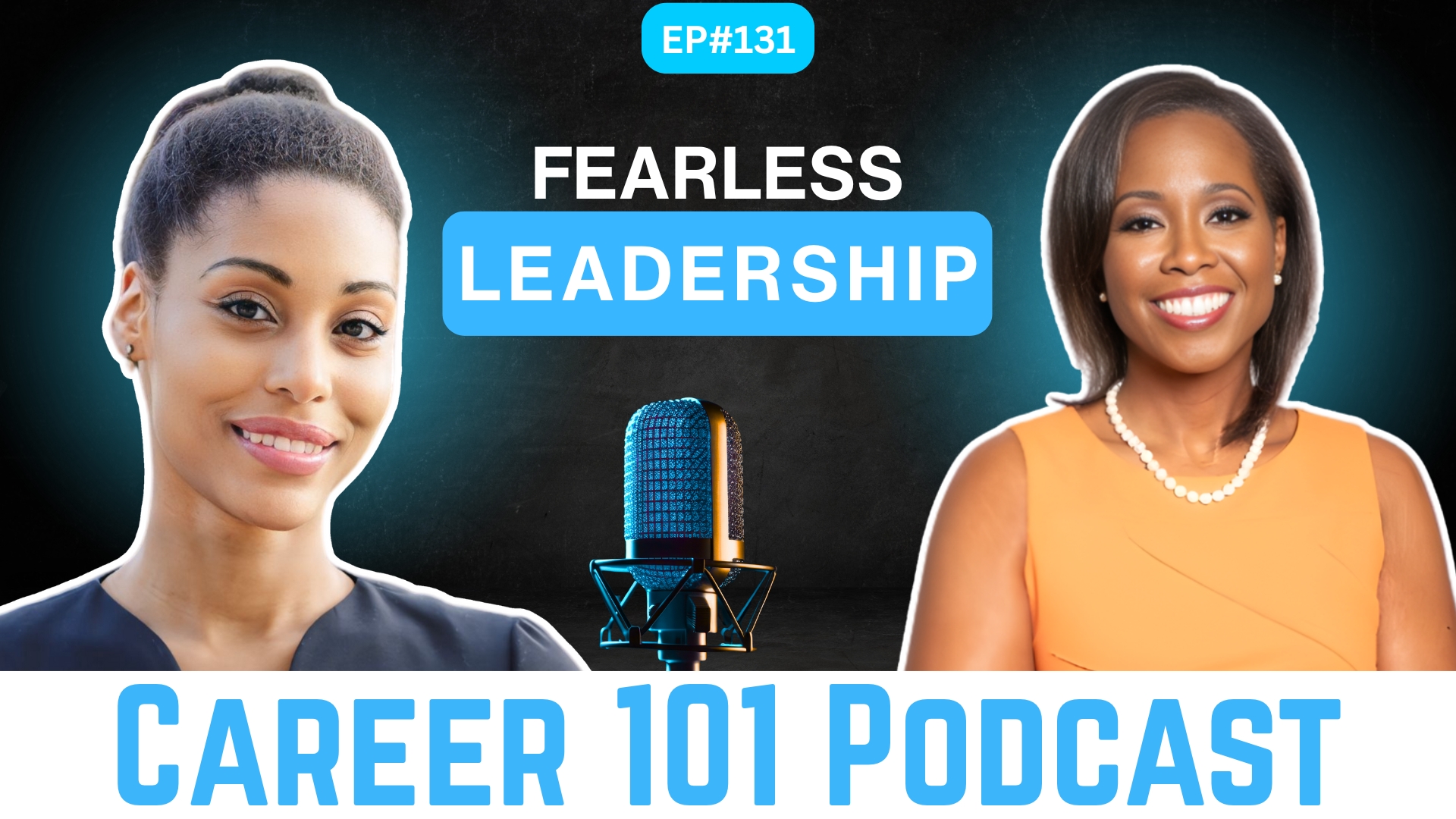
Fearless leadership takes center stage in this episode, designed to help you move forward with courage, clarity, and genuine care. Discover why bold, values-driven decisions ultimately triumph over playing it safe, the real power of advocacy, and how to transform setbacks into fuel. You’ll find practical strategies for growth you can put to work as early as this week.
Our host and CEO, Porschia, walks you through actionable tools designed to build genuine confidence quickly. Learn how to choose a leadership style that truly fits who you are, leverage feedback effectively, and demonstrate your impact without the empty jargon. Expect direct conversation, real-world stories, and tactics you can test in your very next meeting.
We also tackle how to leverage sponsors, mentors, and your peer network to accelerate your progress when advancement feels stalled. You’ll get a clear plan to map the skills you’re already using, translate them into tangible outcomes, and maintain a “brag book” that lets your results do the talking. We’ve made room for wellness, too, because sustaining high performance requires it.
Angela Harris is the Founder and CEO of 2638 Management Group and host of the F.L.O.W. podcast. Recognized as a top coach in Washington, DC, she blends leadership development with holistic wellness. Her path from tech to coaching shows what brave, consistent action can create.
What you’ll learn:
- What fearless leadership actually looks like day-to-day, including small, weekly actions that compound into long-term confidence.
- A straightforward feedback loop to identify blind spots and convert advice into ingrained habits.
- How to select a leadership approach that aligns with your core values, your team, and the situation at hand.
- Tactics for using sponsors, mentors, and peer allies to access stretch roles and opportunities more quickly.
- A tried-and-true “brag book” method to document your outcomes for reviews, interviews, and compensation conversations.
- Realistic wellness practices that reduce stress and safeguard the quality of your decisions.
As a thank you for listening to this episode of the Career 101 Podcast, we are sharing our FREE master class – Career 911: Solving the Top 5 Challenges Executives and Professionals Have! It’s a training based on solving the common problems our clients have experienced to reach their goals. You can get access to the master class here!
Resources:
- Episode Transcript
Porschia: [00:00:00] Hello, I’m Portia Parker Griffin, and I wanna welcome you to the Career 1 0 1 Podcast, a place for ambitious professionals and seasoned executives who want an edge in their career. We’re talking about all of the things you were never taught or told when it comes to career growth, development, and change.
Now let’s get into it.
Today we are talking about Fearless Leadership with Angela Harris. Angela V. Harris is the founder and CEO of 26 38 Management Group, a leadership development and coaching firm dedicated to cultivating transformational leaders and enhancing employee engagement. Recognized as one of the top coaches in Washington DC by Influence Digest.
Angela has received numerous accolades for her impactful work, including serving [00:01:00] as a South by Southwest mentor and being featured in Business Insider Magazine. Angela hosts the Flow Fearlessly Leading Our Way podcast, where she amplifies the voices of black women leaders sharing their remarkable journeys and insights.
Angela holds a Bachelor’s degree in Information Systems from Drexel University and a master’s degree in Information Technology Leadership from LaSalle University. Angela also received an honorary doctorate degree in ministry from West Coast Bible College. She completed her coach training at the Institute for Professional Excellence in Coaching.
In addition, she’s a certified Reiki practitioner and holds the associate certified coach credential from the International Coaching Federation. Hi Angela. How are you today? I. Hi Portia. Thank you so much for having me. We are excited to have you with us to discuss Fearless Leadership, but first we wanna [00:02:00] know a little more about you.
So tell me about 7-year-old Angela.
Angela: 7-year-old Angela grew up in Washington, DC. I was actually raised by my father. My mother died from stomach cancer when I was three years old, so I was raised by my father. So navigating childhood, I felt honestly, I think I was the only. Student in my elementary school that didn’t have a mother.
So navigating that came with its own unique experiences. I was also overweight as a child, so navigating, teasing and bullying in some instances. But in the midst of all that, I always had a strong focus on academics because that was what was preached to me at home. My father was a huge cheerleader for education.
I remember from a very young age, probably about five years old. He always stressed the importance of getting as much education as I could, so always made sure that I was doing well in school. And I also remember a [00:03:00] 6-year-old Angela saw her first computer, so I think probably at eight, between like age seven to nine, I was probably telling something to my father about computers because fast forward to age nine, that’s when my father purchased my first computer for me.
Porschia: Love it. Love it. What did 7-year-old Angela wanna be when she grew up?
Angela: I’m not sure if I knew it was computers at seven, but I think when I was like five, I was fascinated with animals. So I think at five years old, I may have wanted to be a veterinarian at some point, but I definitely know when I got my first computer, like I knew that I wanted to pursue a career in technology at that time.
Porschia: Love it. Love it. Veterinarian was one of my first dream job goals too. Angela, so tell us about some highlights or pivotal moments in your career before you started your business.
Angela: That is a very interesting question and I feel like I’m struggling trying to answer that a bit, just because I was a black woman in technology, [00:04:00] so that came with its own unique experiences and.
It was always my goal to, number one, attend college and start a career in technology. And I’m a first generation college graduate and growing up we didn’t have the level of women in tech or girls in STEM initiatives that are available today. So I didn’t know at that time when I chose my major in my career path that I was going to be entering a white male dominated industry.
In a lot of my classes in college, I was like the only woman or black woman, in my classes. And naturally, when I started my first job, I was the first black woman in the organization. So it wasn’t the experience that I expected. So honestly, I feel like I struggled trying to identify highlights because when I looked at most of my career, I was always undervalued, underpaid, told I was not qualified to move forward.
So it’s hard, identifying a highlight. When I knew that I had the. The capability or the ability to move forward when it always wasn’t appreciated.
Porschia: So it sounds [00:05:00] like to me, Angela, it was more of pivotal moments where you recognized your value and recognized that you belonged in the room and Yeah.
Made decisions, I guess accordingly. What motivated you to become a coach?
Angela: I’ve always been a lifelong learner and passionate about my own personal and professional development. Simply because I didn’t have some supportive managers throughout my career. I was always the one having to advocate for myself or just to take control of my career.
- I honestly don’t think I had any manager ever take an interest in growing or developing me. So to your earlier point, I always had to stand up for myself and create the opportunities for me. ’cause nothing was handed or presented to me. So I didn’t have mentors very early in my career, and I had to navigate some of those difficult situations is just based on what I thought was best to do at the time.
So I didn’t have that guidance and support. So I developed a [00:06:00] passion for mentoring other. Professionals and women, just to share what I had learned along the way. I don’t know if I knew it was mentoring at the time, but I just wanted to be supportive to other people coming behind me. So definitely had a passion for mentoring.
And then in 2020, I remember I did a archetype assessment. I was in a. Professional development program.
Porschia: And I did
Angela: an archetype assessment and my profile description was a pusher. And the way they described it was that it was the type of person that’s always supporting, encouraging, and motivating.
And I knew that at some point I wanted to start monetizing some of the work that I was doing. So I’m like, this sounds coaching. So let me start learning about professional coaching and what that might look like. And so that got me curious about coaching. In 2021, decided to pursue professional coach training, so that’s how it all happened.
This basically my passion for lifelong learning and development essentially.
Porschia: I love that. I love that. And we both went to the same coach training or [00:07:00] certification program. So Angela, as you were exploring coaching, how did you decide to focus on leadership coaching? I.
Angela: Again, motivated by my own personal experience.
Going back to my corporate career, you mentioned that I have a master’s degree in information technology leadership, and I spent 24 years working in corporate America, and I never officially made it to a leadership role in corporate America. Not for lack of trying. I was always applying or, putting myself out there for those opportunities, but I was really told I didn’t meet the competencies or there was bias involved.
So never officially holding a leadership role in corporate America. However, I. Recognizing that I was a leader. I’ve led nonprofit organizations, nonprofit boards I’ve ran my ERG at one of my companies. So I clearly had leadership skills that were valued and appreciated outside of my day-to-day job.
And just recognizing that you don’t need a title to be a leader. So essentially [00:08:00] trying to be the person that I essentially needed early in my career, because again, I didn’t have mentors yet, alone coaches when I was navigating my career. So just trying to be that support for somebody else.
Porschia: I love that.
And before we get into deep with leadership, I wanna know, what is your definition of a leader?
Angela: Wow, that’s a really good question. I would say, just based on how I try to model myself, I guess again the person that is supporting, encouraging, and growing others and helping them to reach their full potential.
Porschia: Yeah, we discussed leadership and leadership development a lot on this podcast. Back in episode 89, we talked about different leadership styles, and it was one of our most popular episodes. So what are your thoughts on people utilizing different leadership styles?
Angela: I think you have to find a style that is authentic to you.
And personally, I tend to [00:09:00] gravitate more towards the servant leadership style because service is definitely one of my core values. And it’s going back to the fact that we are both IPEC certified coaches. I’m very high on the level four on the ELI scale. So level four is a level of service, care and compassion.
So there you go.
Porschia: You talk a lot about being fearless. What is your definition of fearless leadership?
Angela: I would say not being afraid to take bold risks. Like for me, I’m A-B-H-A-G person, big hairy or a audacious goal. So not being afraid to take risk, and just advocating for yourself and honestly not giving up.
Porschia: I love that. And I think that a lot of people have trouble actually. Putting those things into practice in their own career. So I see that a lot. People being [00:10:00] afraid to take the risks or advocate for themselves. Speak up. What would you say to someone who says, yeah, that sounds great, Angela, but like, how do I actually do that at work?
Angela: Yeah, so one of the things, I see that a lot with my clients as well, and one of the things that I do, I try to just hold up the mirror and just ask them to explore how they’re already doing. Oftentimes we talk ourselves out of it thinking that we don’t meet the qualifications or we’re not ready yet.
However, everyone has transferable skills. So again, it’s, it is getting them to take a look back and assess those transferable skills and how they can apply them to new opportunities. Okay. So when you take it from the perspective of leadership, again, you may not have officially held a leadership title, but you most likely led a project that’s leadership.
So this, again, this getting creative in how you frame, reframe things.
Porschia: Yeah. So Angela, how do you think fearless leaders are different from other leaders out [00:11:00] there?
Angela: To the risk taking, you’re not afraid to step outside of your comfort zone to try new things. And as an example, I talked about ERG, employee Resource Group Leadership. I think it was back in 2016, the company I was working for at the time, I was the leader of our women’s ERG. And going back to the risk taking and trying new things, I came up with the idea to plan a women’s leadership conference.
We had never done this within the organization, and to be honest, one of our executive sponsors didn’t think we could pull it off. And some of my members didn’t think we could pull it off. But long story short, we pulled it off. And initially when we. Started advertising for the conference, we said, okay, we don’t want to get ahead of ourselves because we don’t know how it’s gonna be received.
So I think we opened up registration for 80 people. The 80 slots sold out the first day and we had a wait list. And so when the conference actually, when we actually had the live conference, we probably had, I wanna say maybe [00:12:00] 130 women in the room. So it’s not being afraid to try new things and go outside of your comfort zone and just learn along the way.
Porschia: That, that sounds like a career highlight, Angela.
Angela: And honestly, it’s, and I’ll say when I think when I do this, going back to your earlier question, when I think about career highlights, a lot of them don’t necessarily relate to my actual day-to-day job. That was like, being running an ERG is like off the side of your desk type job.
So it wasn’t necessarily related to my day-to-day work in technology. Although, again, I was running a 300 person ERG at the time, and I had a core committee of a think about 12 women on my core committee for that organization.
Porschia: Wow.
Angela: Yeah. But again, that wasn’t viewed, that was not viewed as leadership.
Porschia: Yeah. Yeah. Why do you think that wasn’t viewed as leadership?
Angela: Not having a understanding leader at the time? And to give you a concrete example. While I was the head of the ERG, [00:13:00] there was the opportunity to apply for a leadership development program. And I think one of the criteria said that you had to have had leadership experience.
So naturally I was referencing my experience with the women’s ERG, and my, you had to be nominated by your manager. And I just had like my mid-year review with that particular manager and he was singing my praises and oh, if something were to happen to me, I think you’re the most likely candidate on the team to replace me.
And so when I came back to him and say, Hey, I saw this opportunity that I would like to su, that I would like to pursue, and I would like your support in terms of nominations. He refused to nominate me saying I didn’t have leadership skills.
So again, he didn’t value the work that I was doing right within the ERG, whereas the company said that, participating in ERGs was a great way to build leadership skills.
Porschia: Yeah. And you were leading the 12 women on the committee that you just Yeah, and like I said, we had
Angela: 300 women in the organization and even with the conference, I built external [00:14:00] relationships with other company ERGs in the area.
Porschia: Yeah. Wow. There’s a lot we could say about that manager, but we’re gonna move on and go back.
You made me think of something that I think it comes up a lot. I won’t say a lot. It comes up sometimes and I don’t think that people zero in on it enough. The importance of having a sponsor in your career. So you’ve talked about mentorship a lot. And there are differences between, as we know, mentors and coaches and sponsors as well.
Yeah. And can you talk a little bit about sponsorship? Because I’ve seen this come up and I talk about this with some of our clients, but I wanna hear, from your work and what you do, tell me about, career sponsorship and how that could show up for someone.
The Career 1 0 1 Podcast is brought to you by Fly High Coaching, where we help our clients thor to their full potential. [00:15:00] More and more professionals and executives are setting out to achieve their career goals, but without the right support, it can be difficult, if not impossible. Whether you need career coaching, interview coaching, or a program with a professional resume and a LinkedIn makeover, we’re here to help.
Could your career use some 9 1 1? It’s not uncommon for executives and professionals to feel a little overwhelmed, stuck or confused when it comes to their career or income. There are other people who wanna know. How to ramp up their success consistently, achieve their goals, and make a bigger impact.
After hundreds of clients came to me with the same issues, I started recording the patterns for the Career 9 1 1 Masterclass. Solving the top five challenges executives and professionals have. In the free [00:16:00] masterclass, I share the exact strategies our clients use to tackle the top five problems. Check out the link in our.
Show notes.
Angela: Absolutely. So a sponsor is someone who is going to sing your praises and sing your names in rooms that you are not in.
They are. Talking you up behind those closed door conversations. So when executives are talking about promotions, they are saying, Porsche’s ready now. She’s done, great work on these projects. She is, she deserves to be in this role. And they will advocate and put their names on the line to get you moved up on special projects or get you promoted and spon actually mentors over time, depending on the relationship, can actually develop into sponsors.
So it’s important to. Build and nurture and maintain relationships over the years, because I have a example of a mentor that actually became a sponsor for me, and that was just [00:17:00] through years of communication, even after she left the company where I first met her.
Porschia: Yeah. Yeah. I love that. And you’re absolutely right, and I.
I talk to our clients a lot about understanding the differences between, coaches, mentors, and sponsors. And to your point, sometimes someone can serve in a dual role for you. Yeah,
Angela: yeah.
Porschia: As well, it’s. Sad to hear that your manager at that organization was not willing to, promote you in a kind of sponsorship way.
Yeah. But it’s important for really professionals to look for sponsors and to your point, cultivate those relationships. Angela, from your perspective, what are some of the biggest challenges you’ve seen professionals and executives have with becoming a fearless leader?
Angela: Again, just looking back to my personal lived experience, I would say, lack of opportunity for me not having those [00:18:00] advocates, those sponsors, I always having to be the one to advocate for myself. Not having my skills valued sometimes being underpaid for the work that I was doing.
Porschia: And so if someone, was listening to this and they’re saying, oh my gosh, Angela, that’s me, right? I’ve had the lack of opportunities. I haven’t had my skills valued. What can I do to. Pretty much do what you did, right? Because starting your own business is definitely fearless leadership.
So if someone finds themself experiencing those challenges how can they overcome those to be a fearless leader?
Angela: There’s several ways, and you talked about having mentors, so you definitely wanna have, I guess I was what some people call a board of directors, so that could be, mentor sponsors, also peer mentors.
So having conversations with those individuals. Also working with the coach is a, is a good approach for that. And also just, believing in yourself and recognizing that [00:19:00] growth is uncomfortable and sometimes you have to. Put yourself in those uncomfortable situations to get you to where you ultimately are meant to be.
We spend so much of our life and time at work. We deserve to be happy and fulfilled by the work that we are doing. We definitely deserve to be recognized for our talents, and so sometimes that may mean you have to leave an organization for a better opportunity. Stop sitting around and waiting for that, that, that organization to recognize you.
You have to recognize your own skills and talents and not be afraid to walk away.
Porschia: Yeah. I love that. I. Definitely agree with, what you mentioned about sometimes growth is uncomfortable. And having, coaches mentors, sponsors yes. A lot of people call it a board of directors.
I call it a career support system. Those people who can help you really nurture, you know what. [00:20:00] Goals or dreams you have for yourself. Yeah. So we’ve talked about quite a few things. Are there any additional tips that you can share to help people if they want to focus on their leadership?
Angela: I like to encourage my clients to have a brag book or. Whatever you wanna call it. And basically what that is, you just write down your accomplishments. So if you worked on a project where you saved the company, let’s say, I don’t know. $10,000, or you increase efficiency by, X, Y, and Z.
Just wanna document all the amazing work that you’re doing, number one, so you can leverage this when you’re, interviewing for new roles. But also when it comes time for performance reviews, you have a running list of things that you can just pull from instead of trying to think back, okay what did I do the last six months?
Or what did I do this last year?
Porschia: Yeah, you
Angela: definitely wanna be able to show how you are driving impact within your [00:21:00] organizations.
Porschia: Absolutely. Do you use any personality assessments with your clients, Angela?
Angela: Not personality assessments, but I do leverage the Energy Leadership Index assessment.
Porschia: Love it. Love it. So I obviously have used that before too. I like utilizing personality assessments, especially when it comes to leadership as well, just because I think. It’s another tool for self-awareness. And when people can find out how they’re showing up it can help them to understand how other people view them.
But also get insights on, strengths, weaknesses, and areas where they could, in this case, become that fearless leader, right? That might be different. So what they specifically need to work on as opposed to someone else. Yeah. Yeah I’m big into personality assessments if clients are open to it,
Angela: yeah.
Which ones do you prefer?
Porschia: Yeah, so I’m a master practitioner of the Myers-Briggs type indicators. Okay. I’m familiar with
Angela: [00:22:00] Myers-Briggs. Yes.
Porschia: I think that one is great. That’s probably the first one that I like to go to. And then we also do like retreats and workshops with groups and teams with the MBTI.
Because you can look at the whole team’s personality. Yeah. Yeah. Where they might have a blind spot. Or overlook something. And then I’m also certified in the Hogan assessment. Okay. Which you might have heard of too, which is another personality assessment. It’s a little more psychological in nature, but they’re great insights.
So those are my two probably favorites of choice. Nice. Okay. So Angela, tell us more about your business.
Angela: I started my company 26 38 management group while I was still working full-time back in 2020 with the anticipation of eventually, phasing out of corporate America. And again, I wanted to be able to support other professionals as they were navigating their career and just be able to.
Via support and guide them [00:23:00] to that next level, whatever that looks like for them. So in terms of services, we provide individual and group coaching, leadership development, workshops, assessments, and also holistic wellness services.
Porschia: I love that. And holistic wellness is so important.
Angela: Yes, it is.
Especially now with all the changes that we’re seeing in the workplace, especially with the return to work. So there’s a lot going on.
Porschia: How do you think that holistic wellness piece contributes to, fearless leadership like we’ve been talking about today?
Angela: That’s a great question Again, for me.
It’s trying something new. So you mentioned in my bio that I’m a certified reiki practitioner, and that falls under the category of holistic wellness in my opinion. And reiki is a energy healing modality where energy is transferred via direct hand contact, or, hovering over, the body to support stress, [00:24:00] release and re relaxation and honestly healing and.
I stumbled on Reiki just through my own healing journey. In 2022, I was diagnosed with breast cancer, which I firmly believe was a result of the traumatic work incident and stress being stored in my body, and the stress manifests in the form of cancer. And then seven months later, I was diagnosed with work related depression, anxiety, and PTSD, and that resulted in me.
Pivoting from my basically ending my corporate career to pivot into my business full time. And throughout my healing journey, I tried chakra balancing. And the first time I did that, I remember the moment that the practitioner touched my feet, I was just in tears. So clearly I had a lot and my body was still holding onto.
So again, that got me curious about, holistic. Wellness and started just educating myself. And last fall I decided to get certified as a Reiki practitioner just because of my own experience [00:25:00] with the mind Body connection and the body keeps score.
Porschia: Thank you for sharing that, and I am glad to hear that.
It sounds like you have, found tools and things that have helped you to work through your diagnosis. I had a whole lot of thoughts, Angela, but I just think that to your point holding that energy, and those emotions, those thoughts, those feelings I. That show up for many people in corporate who are dealing with, unsupportive, managers or toxic work environments.
Angela: Yeah.
Porschia: It really does manifest, in health challenges and issues. And, I’ve been through burnout multiple times in my career. And the podcasts of some of the podcast listeners know that. So thank you for sharing and highlighting that too. I think the holistic wellness piece sometimes gets forgotten, especially with high achievers and clients with type A personalities.
So we are going to be [00:26:00] providing a link to your website and your other social channels in our show notes so people can find you online. But what is the best way for someone to get in touch with you?
Angela: Outside of my website I’m most active on LinkedIn, so I’m Angela V. Harris on LinkedIn.
Porschia: Great. Great.
And since you are another coach, Angela, I love to ask coaches this question, what is your definition of career success?
Angela: That’s a great question. Honestly, I think it’s going to depend on the individual. I know for me, success is making an impact. Having, being, having the opportunity to do fulfilling work and I guess living life in my own terms.
Porschia: So now I’m gonna ask you our final question that I ask all of our guests. How do you think executives or professionals can get a positive edge in their career? [00:27:00]
Angela: First of all, by investing in yourself, believing in yourself, investing in yourself. Those are definitely two things you have to. You can’t expect a company to see your value if you don’t see value in yourself.
So you have to just do that internal work to believe that you are worthy of those opportunities. And again, not being afraid to invest in yourself. Being that lifelong learner, taking advantage of internal training classes, and if finding mentors and finding sponsors and, peer mentors joining organizations.
Porschia: Angela, you have shared a lot of wisdom with us today. I’m sure that our listeners can use it to be more confident in their careers. We appreciate you being with us.
Angela: Thank you, Portia. Enjoyed our conversation.
Porschia: This episode was brought to you by the Brave Bird Career Alliance, the go-to membership designed [00:28:00] for seasoned executives and ambitious professionals with everything you need for career planning, strategy, training, and support. Thank you again for listening to the Career 1 0 1 podcast. I hope you have at least one key takeaway that you.
Can use in your own career. If you enjoyed hanging out with us, please rate, subscribe, and share this podcast. Until next time, here’s to your success.