Last Updated on December 30, 2025 by Fly High Coaching
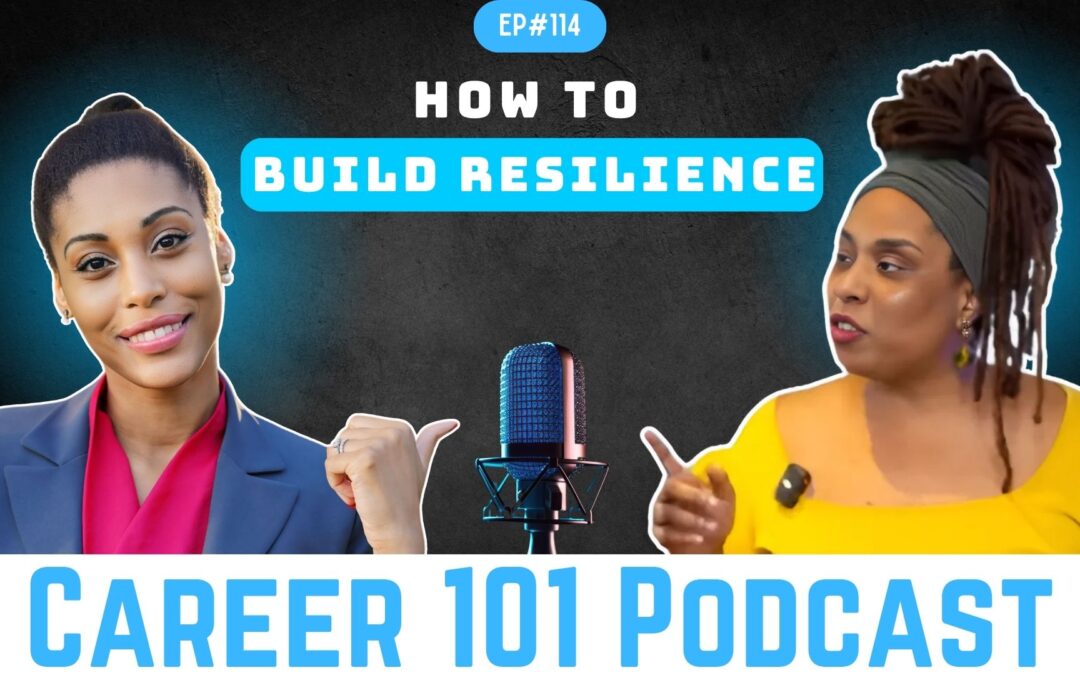
They explore resilience not just as bouncing back, but as bouncing back stronger, finding purpose and growth in adversity instead of getting stuck in a “yo-yo” cycle of recovery. Executives are often on autopilot, managing teams yet neglecting their own well-being; this conversation shows how to break that pattern.
Discover why acknowledging reality without dwelling on it is crucial, and how cultivating awareness can help prevent negativity and imposter syndrome from hindering your potential. Alethea shares practical, science-backed tools that you can use immediately to recenter and refocus under pressure.
Alethea is a motivational speaker, bestselling author, and certified holistic coach who founded Alethea Felton Coaching and the Resilient Leaders Alliance. As host of The Power Transformation Podcast (Top 5%), she empowers leaders to turn adversity into triumph and lead with purpose.
What you’ll learn:
- The true definition of resilience: how to bounce back and thrive, not just recover
- How to Build Resilience through simple breathwork that resets your nervous system in under a minute
- Key visualization strategies to shift focus from setbacks to future success
- Journaling prompts and goal-casting techniques that reinforce a growth mindset
- Daily affirmations that rewire negative thought patterns into positive action
- Why resilience is a lifelong practice—and how small, consistent habits yield big transformations
Resources:
- Episode Transcript
Porschia: [00:00:00] Hello, I’m Portia Parker Griffin, and I wanna welcome you to the Career 1 0 1 Podcast, a place for ambitious professionals and seasoned executives who want an edge in their career. We’re talking about all of the things you were never taught or told when it comes to career growth, development, and change.
Now let’s get into it.
Today we are talking about mindset, how to build resilience with Athia Felton. Athia Felton is a motivational speaker, bestselling author, certified holistic coach and founder of Athia Felton Coaching. And the Resilient Leaders Alliance as host of the Power Transformation Podcast, a top 5% ranked show, she celebrates shifting pain into purpose and the power of turning adversity into triumph.
[00:01:00] With over two decades in education and entrepreneurship, a Olivia helps leaders master resilience, transform setbacks into breakthroughs, and elevate their overall influence. Personally and professionally, she turns life’s challenging, plot twists into power moves, equipping leaders to bounce back level up and thrive.
Having overcome life-threatening health challenges. Since birth and severe childhood stuttering, she embodies perseverance, inspiring others to reclaim their power and lead with purpose. Hi, Alicia. How are you today? Hi Portia. I am
Alethea: doing great and I heard that and I said, wow, this alithea sounds pretty awesome.
Yes, you
Porschia: are pretty awesome. That is an amazing bio. Thank you. I am so excited to have you with us today. We are going to discuss mindset and how to build resilience, but. First we wanna know a little more about [00:02:00] you. So tell me about 7-year-old aia.
Alethea: 7-year-old aia. Oh my goodness. Okay. So first of all, from a physical standpoint, 7-year-old.
Athia had stunted growth. I’m five nine now, so the world was so huge to me as 7-year-old. Aha. I remember wanting to get on certain rides at amusement parks and I couldn’t. I just remember everybody being giant size because I was so scrawny, but 7-year-old Athia was so inquisitive, so curious. Playful, tomboy.
I was the ultimate tomboy where I loved to climb trees. I loved to play in the dirt. I liked Tonka trucks. I didn’t like dolls. At the time. I liked Tonka trucks and riding in my big wheel, and that was 7-year-old aia. Always getting into some. I don’t like to use the [00:03:00] word mischief, but I had such a wild imagination that I was always busy.
Getting into something, sometimes getting in what the old folks called grown folks business. Yeah. So I was a good kid overall but just very carefree and enjoy life. That’s how I would’ve described myself as 7-year-old aia.
Porschia: Yeah, that is great. 7-year-old alithea sounds like a fun time. And you turned out to be five nine, which is tall.
Things turned around on that end too.
Alethea: Yes, indeed.
Porschia: Yeah. Tell us about some highlights or pivotal moments in your career before you started this business. Pivotal moments
Alethea: in my career. Wow. So for 20 years, from the age of 21 until 41, I was a public school educator and I used the word educator broadly because [00:04:00] I taught Spanish and English.
But then also I became a school leader. Now, although I was qualified and. Certified to be a principal and had my principal’s licensure. I never wanted to be a principal, but instead I had different leadership roles on admin teams throughout schools. And then I transitioned and ended my career in human resources and I really enjoyed that.
And in hr, what I was doing was, I was working for the largest district in Maryland and I was going from school to school. Coaching teachers doing different evaluation reports on them? Pretty much, although I didn’t fire teachers, what I wrote in these reports would influence the panel if that teacher kept his or her job.
And ultimately, of course, that was not the case of wanting them to [00:05:00] be let go, but a highlight was even for certain teachers. That did get terminated. They still wanted to work with me until the end of the actual school year. So I became national board certified. During my time as a teacher, I won different awards and had different recognition when I worked in.
DC public schools. Years ago, I earned the designation of being highly effective, which was one of the highest rankings then. So those were different highlights, but more importantly, a highlight that sticks out to me, Porsche, and to all of you, was when I was still in the classroom in one school year.
There was a student that I worked with closely who was in my English class. He was an eighth grader reading on a second grade level, and in one school year I was able to [00:06:00] get him to be on a 10th grade reading level by the time he left my class. And that was probably the greatest highlight of my career because that’s unheard of from.
Second grade reading level till 10th grade. And then on top of that, as I was in my career, I also was doing entrepreneurial ventures from the time I was in my twenties and everything. So I did catering. I had my own catering company. I also went to a point where I had my own health coaching business.
I did network marketing, so I was always doing something in entrepreneurship.
Porschia: Wow. Aika, I wanna start by saying thank you for your dedication to education. My mom is a retired teacher and she was actually born in Maryland, funny enough. Oh. But I, so I was a teacher’s kid and I grew up, after elementary school I [00:07:00] walked to the middle school where my mom was a teacher and saw her, decorating her classroom, grading papers.
The old fashioned way like you had to back then. And teaching middle school, which I know is probably the hardest school, age range to teach. So just hats off to you for all that you’ve done. You have a very interesting background. So with all of that background, what motivated you to start this business that you have now?
Alethea: Oh my. Okay, so let me consolidate this because this is not a two hour show. So let me consolidate. What led me to start where I am now? A part about 7-year-old alithea that I left out was the fact that as a child I was, I guess you could say quote unquote sick, but the thing is, the way that my parents raised me, I didn’t realize just how sick I was.[00:08:00]
I was born with autoimmune illness that was later diagnosed years down the road, but I remember always feeling tired. Achy. I was always sick, lethargic. My joints always hurt when I was a kid, and what would happen though is my mom especially knew something wasn’t quite right. My dad, and I can say this openly because we’ve talked about it since, he thought at times my mom was just a worrier.
Or over exaggerating, but I’ve heard, I’m just a cat mom, so I don’t have real kids. But I have always heard mothers know their children and so mommy knew something wasn’t quite right and would take me from doctor to doctor. So that’s what attributed to a lot of that stunted growth as a kid.
Then I had a freakish growth spurt when I was about 13, 14, where I, 13, 14 where I got my height. And what happened, Portia, was as [00:09:00] years went on, I ended up feeling sick, having these feelings of sickness, but I still moved forward and pressed on. And my early thirties is when a lot of stuff really hit the fan and went.
Four just took a turn for the worse where I started getting sick, had internal bleeding, had all of these things, and I was eventually diagnosed with Crohn’s disease and also a very rare liver condition called primary sclerosis cholangitis, which is a very gradual hardening of the bile ducts, which can lead to full and complete liver failure.
In 2012, I had a shift. Where I ended up getting liver failure cirrhosis. I was about to transition into hospice. That’s how sick I got. And then something that only can be described as a medical miracle turned it around [00:10:00] where that didn’t have to be, but I planned my entire funeral. But meanwhile, in between all of this Porsche, I continued making achievements, having strides, reaching goals, and I had other bouts of Crohn’s, specifically flare-ups over the years.
And my liver still wasn’t fully healed. Even to this day, as I am interviewing with you in 2025, my liver still is technically compromised, but I don’t qualify yet for a transplant because I’m not sick enough. Although blood work is never normal, I don’t have other symptoms that would lead to a transplant.
So at 43 I’m thriving. And so I share all that to say in this space of resilience. Mindset transformation. During the pandemic, I made a pivot. I had been doing the health coaching, but I felt something stirring inside of me as if it [00:11:00] were time to really evolve even more into this new version of myself.
And so what happened was I made a decision. I had a coach for many years that I’m still or friends with. He’s a mutual friend of ours. But I can say publicly that in December of 2023, that person lovingly. Fired me and what he did was he said, at the places that you’re trying to go and reach, I see so much in you where I know where I can take you.
And he’s excellent with what he does, but instead of him taking my money, he knew that where I was trying to go, that wasn’t his niche area. So he needed me to transition into finding someone else that could really. Craft this vision more into these new spaces. And so I ended up several months later, meeting [00:12:00] someone who was able to make these dreams that I’m at now come into being where I went from the holistic health coaching since I already had a life coaching certification became.
Holistic transformational coaching. So this resilient space, Porsche is because of the fact I’ve been in leadership for many years, ever since my twenties. Literally in some role with my own business, or even in school, I became leader young In schools where leaders oftentimes are dealing with issues and are smiling, might have a certain level of success.
But life continues to go on. So the shift into this new space had to deal with the fact is I continued making strides despite the health, despite grief situations I had, despite other life challenges, I kept moving forward and [00:13:00] more people need to see that there is hope. Regardless of what happens in your world.
And that’s what led me to this space of being who I am today and getting that word out.
Porschia: Wow, you said so much there, aia. Thank you for sharing your very powerful story. I know of a lot of clients, a lot of family members who are working through chronic health conditions and it’s very different for those individuals than people who do not have chronic health conditions.
So I can definitely see how you were drawn to this resilience space. So we’ve talked about mindset on the podcast before, and we actually have a whole series that goes from episode 77 to 79. But before we get too deep today, I wanna know what is your definition of mindset?
Alethea: [00:14:00] My definition of mindset is how a person views themselves and the world around them.
Porschia: Love it. So many executives and professionals struggle with building resilience, and that shows up in aspects of their life and career. So how do you think resilience affects mindset?
The Career 1 0 1 Podcast is brought to you by Fly High Coaching, where we help our clients thor to their full potential. More and more professionals and executives are setting out to achieve their career goals, but without the right support, it can be difficult, if not impossible. Whether you need career coaching, interview coaching, or a program with a professional resume and a LinkedIn makeover, we’re here to help.
Could your [00:15:00] career use some 9 1 1? It’s not uncommon for executives and professionals to feel a little overwhelmed, stuck or confused when it comes to their career or income. There are other people who wanna know. How to ramp up their success consistently, achieve their goals, and make a bigger impact.
After hundreds of clients came to me with the same issues, I started recording the patterns for the Career 9 1 1 Masterclass. Solving the top five challenges executives and professionals have. In the free masterclass, I share the exact strategies our clients use to tackle the top five problems. Check out the link in our.
Show notes.
Alethea: Oh my goodness. So resilience in taking it for what the word is that sometimes people think of resilience as the ability to bounce [00:16:00] back, but I challenge people to take it a step higher, take it up a notch.
Resiliency is not only the ability to bounce back. It is the ability to bounce back and to thrive and make meaning from the setback that you’ve been in. That is what resilience is, and the way that it affects mindset is. If a person is bouncing back, but that’s all they’re doing and they’re, and they become like a yo-yo of just bouncing back and bouncing back and never reaching that next level, then the mindset is going to be affected where they will begin to have feelings of negativity.
Self-doubt, imposter syndrome, thinking that they aren’t worthy enough. It has a direct correlation on how they view themselves. And that way of viewing themselves or thinking about themselves can also trickle over into what they’re doing in their work life, their businesses, [00:17:00] their own family life. On the other hand, Pia and audience is if a person has that resiliency factor where.
They’re saying, okay, I’m just not gonna bounce back and not go anywhere. But I’m gonna bounce back and dare challenge myself to take my mind to that next level. Despite of what’s going on. To say that although I have these circumstances, I am not them. They may be a part of me, but they are not my entire life.
Then the way that the mindset works. Is in spite of the negative feelings that will come because they certainly come. And stats show us that human beings think more negative thoughts and positive. Our thoughts are more. Repetitive than not. So it’s going to take extra work, but it affects the mindset because then a person has the ability to say, I am who I envision myself to be.
I am [00:18:00] the person who is a true overcomer. I can accomplish whatever I want to and still thrive and make meaning of their life. That’s how it affects it.
Porschia: Drop the mic. Oh no, that was amazing aia. I personally, and I’ve also seen this with many clients, I’ve been that yo-yo, that bounce back. Bounce back.
I’m gonna overcome this and I’ll, get to the next stage. But. Really, I like that second part of what you said, that making meaning of the situation. I think a lot of times, especially high achievers forget to do that. It’s just I overcame and it’s onto the next thing and onto the next thing, and they never really check in to your point to make that meaning.
So thank you for adding that on and sharing that with us.
Alethea: And can I clarify something? I like to tell people also because sometimes people will hear it and say, okay, you are having [00:19:00] hope but yet all heck is breaking loose around you. How is that possible? Then they start to think that it’s toxic positivity, and although we’re sticking with mindset, let me just briefly explain this.
My teachings and way of coaching and speaking are not toxic positivity because baby, trust me. You must acknowledge the mess that’s happening. You must acknowledge it being there. Toxic positivity is when a person is all oh, nothing negative at all is happening. And it’s only the positive. Only the positive.
Only the positive. I. That’s not true. What I mean is you can know that the negative is happening, but you don’t have to focus on it. And that’s where the mindset part comes. So it’s not to say that you’re oblivious to the reality of it, it’s just saying you don’t have to use it as a crutch, and it doesn’t have to be your end all, be all of life.
Porschia: I love [00:20:00] that too. And I love how you define the toxic positivity, because that’s a big thing too, where people don’t acknowledge the reality of what’s going on and they just say, Hey, say in affirmation and it’s all gonna, go away. And we know that’s not the case either.
So thank you. And I think that’s a huge part of mindset as well. Soia, I think you started doing this, but I definitely wanna ask you specifically from your perspective, what are some of the biggest challenges you’ve seen executives and professionals have with building resilience?
Alethea: I think part of the challenges I’ve seen executives, for example, in building re resilient is first, let’s acknowledge the huge elephant in the room when it comes to resilience for.
Executives, they deal with a lot of people and a lot of personalities. And with all of those personalities coming at once, that resiliency factor can take its toll because when you [00:21:00] are an executive or a leader leading multiple people, it is very easy to take on the issues of everybody around you. And a crew is only, in my opinion, as strong as its captain.
So if you are that executive at that head seat, then everything else that happens under you is going to be a direct result of you and what you are doing. So the resiliency factor Porsche, is that sometimes the challenge is executives are so busy. Ambitious in trying to make their roles in their companies or positions work that they even lose sight of what it means to be resilient.
They’re just going through the motions, so they have a hard time even acknowledging the fact, am I really bouncing back and thriving in this particular situation? Or am I just going through something not really recognizing how it’s taking a toll on my emotional, mental, and [00:22:00] physical health as well as spiritual health.
So I think that’s the greatest challenge, is the lack of awareness of even realizing that they aren’t being as resilient as they can be. They’re just used to doing things the same way on how they have done it.
Porschia: Yeah. Yeah, I could see that. It sounds I’ve seen a lot of our clients just be on autopilot, for lack of another term with it.
So yes, I could definitely see that. So athia to some people, mindset and resilience, it’s. They’re hearing what we’re saying and they’re thinking, yeah, it sounds good, but it’s so abstract. How do I even work on that? So what are some of your favorite tools or resources for people to help them with building resilience?
One
Alethea: thing, Portia, that is so easy for everything and everybody to do something that we do naturally anyway, [00:23:00] but in mindset work and resilience training is breath work. Simple breathing techniques can begin to shift your mind’s focus. What that looks like or sounds like rather is, especially if people can’t necessarily see me.
So I’ll describe it is. On a day that seems to be closing in, or you’re just exhausted or you’re tired sitting in your office chair or on a couch or sofa and just taking a break, even if it’s a 62nd reset, closing your eyes if you feel safe and comfortable closing your eyes and just simply taking an inhale in deep.
Holding it for a good five seconds in one, 1000, two, 1000, et cetera, and then breathing it out and doing reps like that for five [00:24:00] times. Because what it does is not only are you getting that oxygen to your brain to refresh. You literally focus on that inhale and that exhale and just breathing and letting it out.
It relieves pressure internally. And keep in mind, I’m also a certified health coach, so all of this I’m telling y’all, is not. Hocus pocus, so it goes hand in hand, right? That’s one tangible way that a person can start because the resiliency comes back, is that you are actually taking the power from within yourself to be able to remove yourself from whatever that conflict or stress is inside of you, to let it go and to say, I am choosing to bounce beyond.
What is happening in the moment to get recentered? That’s one thing that a person can do. Another tangible strategy outside of the breath work. Oh, and let me also [00:25:00] clarify. I said, if you feel safe closing your eyes, because everybody comes with his or whole or her own traumas, and so sometimes closing eyes.
Can make a person more anxious so you don’t have to close eyes. So if you keep your eyes open doing breath work, find a focal point F-O-C-A-L. A focal point can be a wall, a blank wall. It can be something you just focus your attention on in that moment and breathe. Then another strategy is visualization.
Visualization is when you see yourself or your circumstance change for the most improved or better outcome. For example, you spoke early about clients, who are going through some health challenges. Okay. What visualization does, and I will admit, when I was in critical and sick and all that stuff in the hospital [00:26:00] critical con edition, I did visualization strategies where despite.
Having the IVs and the treatments and everything else in me Porsche, I would literally envision myself speaking on stages, speaking on platforms, walking outside on nature trails. Spending time with my family, knowing it was a long shot at that time, but I would visualize myself in that highest state and realm of being and visualization works that can help your mindset because you’re taking your focus off of what’s happening in the moment.
And you are thinking of who you are in that future self, in that better self. Another thing that can go hand in hand with that visualization is writing, visioning, vision [00:27:00] casting on paper. So writing down goals and hopes and dreams, even if you’re having a bad day with your mental. Writing down what you’re thinking.
So journaling. Oh, I could go on and on. And affirmations. I’ll close with that. I am a big affirmation person speaking those things as if they are honey. If you don’t have a $5 in the bank, you say, I am wealthy. I am whole. Money overflows through me and you believe it. And even if it does not sound sensical to other people, it’s okay because the more you speak it, the more energetically you walk into it and the more it will flow and come to you.
It works. There is science now often that is starting to come up proving that this. So this is just not Oh flu, glitz, and glamor. No. It is a direct [00:28:00] correlation to mind resiliency and what you think about yourself.
Porschia: Woo. I love it. I love it. I love it all. We do a lot of visualizations in our membership, the Brave Bird Career Alliance, and we do some, I call it journaling, but really like you mentioned that vision casting when you’re writing that’s all so important.
Soia. I wanna ask you a question that I get sometimes asked in different ways. So let’s say someone’s been listening to this conversation. They love the tools, they love the tips that you’ve given, they wanna know how long do you think it would take for someone to make a significant change to their mindset and increase their level of resilience if they start doing these things?
Alethea: They might not like my answer portion, but I’m gonna say, for the rest of your life, be uhhuh because you never arrive at this. You make [00:29:00] improvements. But I don’t wanna give people the misconception that if you do these and all of your worries and your troubles are going to go away, it takes.
Practice practice. That old cliche practice makes perfect. Might not mean a lot when you’re younger, but when you start implementing these, it’s true it, you can see improvements in time, but it’s no set timeframe. Or a magic pill because everybody’s different, and so the journey will look different for others.
I can tell you all when we’re doing this interview, as I said earlier, it is 2025. I’ve been practicing this for years. Oh my gosh, for years. I’ve always been a dreamer person. But in terms of being very strategic [00:30:00] about what mindset was being introduced rather to these holistic principles, I was introduced in 20, in 2014, so for 11 years I.
I have been consistently practicing this and I still have challenges at times. I still have to reset, regroup, reframe, even though I implement some type of practice every day. So that is my answer. Portia, is it takes a lifetime, but if you’re consistent doing it, you can start seeing changes. On that same day, just on how you feel about yourself, but you’ve gotta keep it going.
It’s not a quick fix.
Porschia: Agreed. Agreed. So tell us more about your business.
Alethea: So my business is, I have a coaching business, Athia Felton Coaching, which is a transformational coaching business. I also do editing and proof [00:31:00] reading and copywriting services too. And so I do. Those in terms of one-on-one coaching.
But I also have, under that, I have my podcast, which falls under that umbrella, the Power Transformation podcast, where I interview people who have overcome different challenges, adversities shifts in life, and they have made meaning out of those setbacks and have created beautiful lives. And also, I have a membership community, the resilient.
Leaders Alliance. That is the newest one where I started it at this point. I started it a month ago. And what that community is, it is for leaders and or entrepreneurs. You don’t have to be a business owner, but you’re leading in some role. On your job, in your company, even in your home. ’cause I do have someone who’s a stay at home mom in [00:32:00] it, right?
It’s open to all genders. And in that we are looking for people who want to make meaning out of adversity. They want to figure out, okay, is this really a failure in my life? Or is this something that’s just a temporary setback that I can grow from? They want community who can help support them. They may be suffering from imposter syndrome or self-doubt, and nobody knows, and they want those tools, but what sets us, US apart?
Are those holistic principles that are incorporated in it. How we see the mind body connection in what we are doing, and that is what the Resilient Leaders Alliance is about. And Portia, I will tell you too, it’s more than just weekly Zoom meetings. It’s a movement because we are having our first virtual conference in September 27th.[00:33:00]
The Breakthrough Blueprint Conference, and it is so much more in that community that is far more than what meets the eye. So if people are interested, please connect with me because I am looking for extraordinary people who really want to continue thriving in their lives to be a part of it. Some amazing people are already in it.
Porschia: It sounds amazing. I love what you said about the mind body connection. I have started researching that more in the last couple of years, and it’s so important. We’ll definitely be providing a link to your website and other social channels in our show notes so people can find you online.
Now I wanna ask you, aia our last question that we ask all of our guests. How do you think executives or professionals can get a positive edge in their career
Alethea: [00:34:00] being themselves? Not being anybody else, be yourself. And that may sound elementary, but it’s the truth. Be not only yourself, but also be bold enough in yourself to know that you don’t have to follow and do what everyone else is doing.
Yes, take wise counsel, but if there’s something edgy in a good way, edgy that you wanna try or you have an idea. That idea scares you or it seems farfetched. Usually those gut instincts, that intuition that’s usually telling you to do it. And so that’s how you get that push, whether you are an executive or professional, being yourself and learning even more to take risks even greater than what you have,
Porschia: do it.
You have shared a lot of wisdom with us today, and [00:35:00] I’m sure that our listeners can use it to be more resilient in their careers and their lives as a whole. We appreciate you being with us.
Alethea: Thank you, Portia. It’s an honor to have you, and also I will say this, and you all might not know, and Portia has no idea that I’m gonna say this too, but I highly recommend Portia and her team for your services because when I transition out of education.
I wasn’t sure if I was gonna go back to another nine to five or not, and just in case they did an exceptional job for me doing a resume and I could have done it for myself. I just didn’t have the time, but it was worth every penny of it. So I want to shout you out. Thank you for your exceptional service and quality.
Thank you.
Porschia: Thank you so much, Athia.
[00:36:00] This episode was brought to you by the Brave Bird Career Alliance, the go-to membership designed for seasoned executives and ambitious professionals with everything you need for career planning, strategy, training, and support. Thank you again for listening to the Career 1 0 1 podcast. I hope you have at least one key takeaway that you.
Can use in your own career. If you enjoyed hanging out with us, please rate, subscribe, and share this podcast. Until next time, here’s to your success.